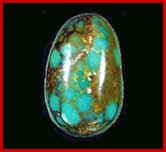
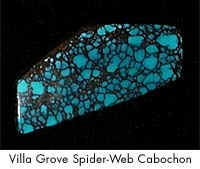
AMERICAN TURQUOISE.
EACH MINE HAS ITS OWN VARIETY
OF NATIVE BLUES AND GREENS.
I taught silver-smithing in a rehabilitation program in Santa Fe, as an alternative to
military service.
I am a Quaker and am a "conscientious objector" I had never seen
such deep blue turquoise
or deep blue skies until I moved to New Mexico in 1973. I have always been
fascinated by how
well the colors sky blue and light brown go together. I dearly love New Mexico.
Persian Turquoise
Outside the Southwest, jewelers sell rings and pendants made mostly with
a very standardized blue turquoise. It has little non-blue matrix and comes
in very regular shapes.
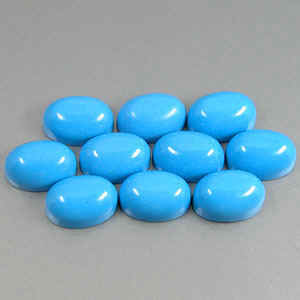
In the Southwest turquoise comes in many colors,
shapes and a wide variety of natural matrices.
It is this rich variety that I wish to catalogue here
for the viewers', and my own, pleasure and edification.
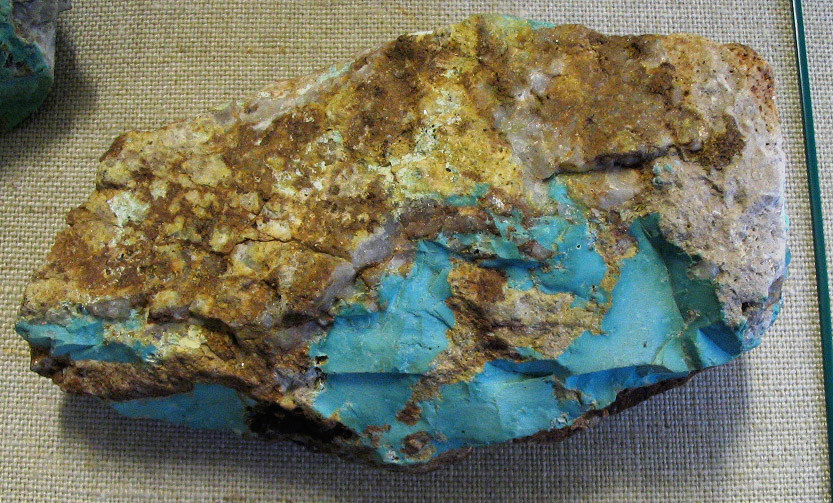
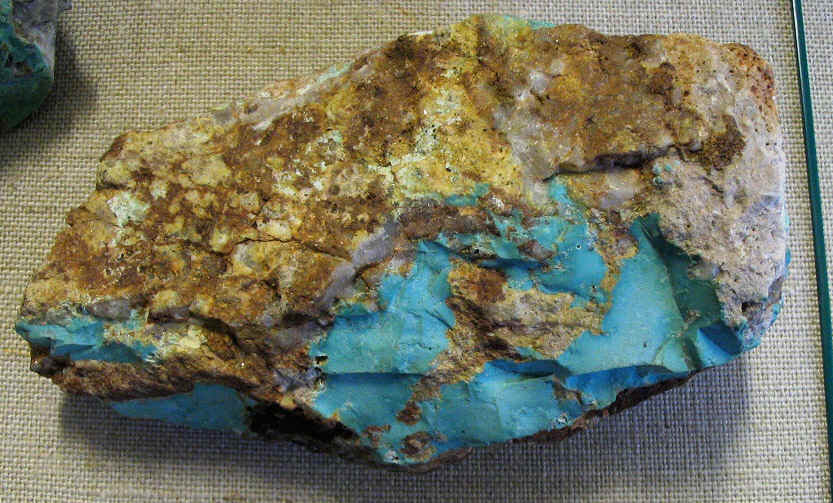
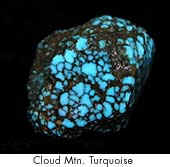
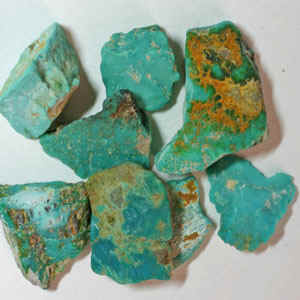
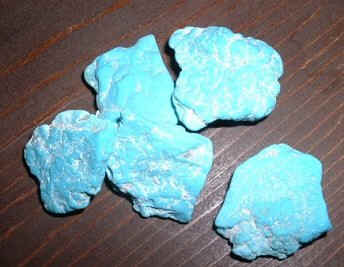
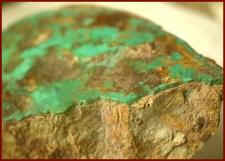
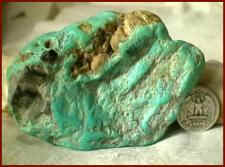
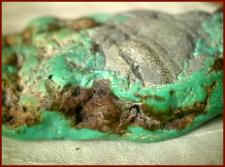
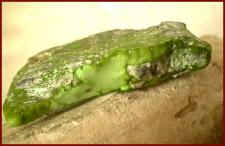
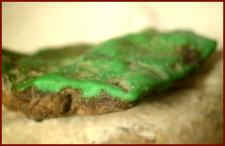
In The Rough
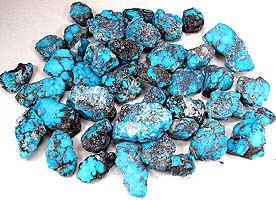
Turquoise Chemistry
CuAl6(PO4)4(OH)8 .
5H20 + Fe
http://www.gemsociety.org/info/gems/turquoise.htm
The International Gem Society writes:
"Chemically, turquoise is a hydrated
copper/aluminum phosphate, of aggregate,
cryptocrystalline structure. There is only one known deposit, in the state of Virginia,
where turquoise is found in transparent to translucent visible crystals. Specimens from
that locale are rare and bring a hefty price from collectors. More typically, turquoise is
found as an opaque deposit in nodules, or veins within host rocks, or as shallow crusts
on the surface of rocks."
Color ranges through shades of blue to blue-green, to yellowish green depending
on the amount of copper which adds blue, or chromium and vanadium which gives it
a green hue, or iron which produces a more yellow variety. There are also rare
specimens of blue-violet color which contain strontium impurities.
"In general, US mines produce slightly greenish blue, to green gems due to
high iron and vanadium content. Most turquoise rough contains patches or veins of the
host rock in which it formed, such as chalcedony or opal, brown limonite, black chert,
or white kaolinite. Such matrix can affect the color and toughness of the stone and
its
workability for the lapidary or jeweler. Relatively pure specimens of turquoise might
have a hardness of around 5 and be moderately porous. In general, a high proportion
of silicate minerals increases hardness and decreases the porosity, while a high content
of clay minerals, has the opposite effect. On one end of this spectrum, then, we find
pieces of hardness 5.5 to 6 that take a bright polish and are minimally porous, and on the
other end are pieces of a soft and chalky nature with so much porosity as to be unusable
without stabilization.
"Turquoise
occurs, usually in arid regions, where ground water percolates
through aluminous rock in the vicinity of copper deposits. Like malachite, it is a
secondary mineral which forms through the interaction of pre-existing minerals and their
solutions. "
|
Stabilizing versus Colonization Treatments
Turquoise stones are often "treated". Turquoise is only a moderately hard
stone.
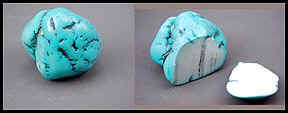
So, it is usually "stabilized" with a backing and then polished. This is
normal and to be expected.
High quality turquoise is not harmed or diminished in value with a backing.
Stabilizing can be
done without changing its color using a resin called "Opticon". When a
stone is "backed", it has
been coated on one side with an epoxy or liquid steel type of compound. This allows softer
stones
(especially Turquoise) to be more safely cut and polished. It also lets them be set
by the jeweler more
easily. The stone can stand out above the bezel that holds the stone tightly in
place. The backing
also protects the stone when it is worn. Some collectors do not like backings
because it is not
natural and and adds to the cost of the stone. But most South West silversmiths use
backed stones
exclusively.
Becuase high quality, naturally deep blue or deep green turquoise is relatively scarce,
a good many turquoise dealers artificially deepen its color to make it more
sellable. Color "treated"
turquoise has very little value. A plastic, which has a color dye, is
impreganted using pressure.
Shoe polish is used by these dealers to give the matrix (the non-turquoise part of the
stone) a more
webbed effect. If you buy them off EBAY and the dealer does not tell you the
stones are "not
color treated", it is likely the color has been enhanced artificially and the stone
is worth little.
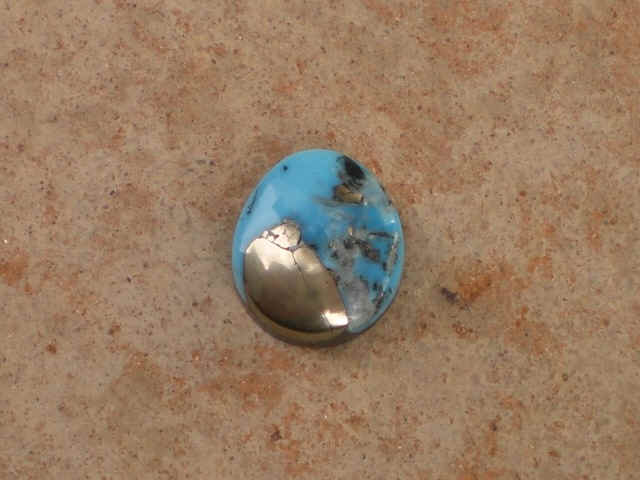
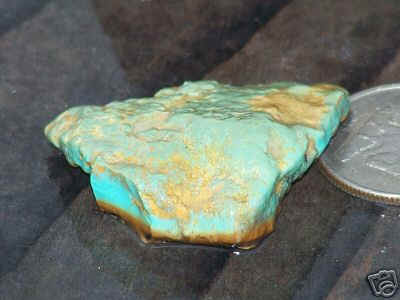
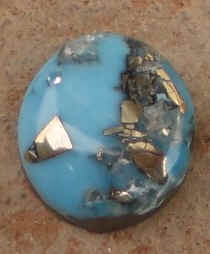
I suspect a gold colored epoxy has been added
to this stone to the matrix more appealing.
Skin Oils will will Turn Blue Turquoise Green
If you rub your turquoise, the skin oils will eventually turn green
a naturally blue turquoise.
I prefer the original colors. If you want to have the stone retain its original
color, don't run it for
"luck". I am told a smoker may alter the stone's color more easily and
much more quickly. Perhaps,
they touch the stone more. So, there's another reason not to smoke.
Know Your Stones - Buy Only Quality -
Make A Smart Investment
Homer Milfred - NM BLM Report on Abandoned Mines, 1994.
http://www.indianvillage.com/turquoisegrades.htm
- High Grade Natural Turquoise: found in all shades from
sky blue to apple green. It is the hardest grade and takes the best polish.
The contrast between the color of turquoise and the color of matrix {or
mother rock} enhances the beauty of each stone. Many
mines produce distinctive stones whose origin can be identified by an
experienced person.
- Enhanced turquoise: The Zachery or Foutz process
impregnates turquoise with vaporized quartz. This makes the stone harder,
darkens the color and takes a good polish. This process is hard to detect by
normal methods because quartz occurs naturally
with some turquoise.
- Stabilized or Treated Turquoise: American manufacturers
have perfected a process using pressure and heat to fill the
microscopic gaps in the stone with plastic resin. When cured the product is a
treated stone hard enough to cut and polish.
Most nugget and some heishi products are made from real turquoise that has
been stabilized. Stabilization allows genuine
but lower grade turquoise to be used in jewelry.
- Wax Treated: Much of the turquoise from China is wax
impregnated. The paraffin treatment deepens and stabilizes the color
but only affects the surface.
- Reconstituted: This term describes pulverized
turquoise scrap from stone cutting mixed with blue dye and plastic binder.
Most products marketed under this name should really by labeled as simulated
“block”. Compressed Nugget is a similar
product made from larger pieces.
- Block: A mixture of plastic resin and dyes that
is produced in loaf sized blocks. We used to call this reconstituted because
we were told it was made from ground up turquoise scraps. In reality there
is no actual rock of any sort in block turquoise;
it is entirely man-made and should be labeled “simulated”. Block
is produced in many colors, simulating many different
stones and shells. Except for occasional batches of Lapis Block that contain
ground up iron pyrite, these are entirely simulated.
Block is used heavily for inlay and heishi.
- Dyed Stones: There are several naturally
occurring stones that look similar to turquoise when they are dyed blue. These include
Howlite, a white rock with black or gray markings, and Magnite or Magnesite,
a chalky white mineral that forms in rough
nodules looking faintly like the vegetable cauliflower. Other simulations
include glass, plastic, faience ceramic and polymer clay.
BEWARE - Treated, Blue-Dye impregnated stones.
Watch out for stones that are "too uniformly blue", especially
when they are advertised as a
"silica" (not a turquoise) and mention the color to be a
"deeply saturated blue". Much of the
turquoise from China is wax impreganted. Chalky lower grade turquoise is
treated with a plastic resin
or epoxy under pressure. An artifical blue color is added over time.
Interstingly, untreated
turquoise will turn green over time, whereas turquoise that has been treated will
not. If a
stone has been treated, it may emit a plastic smell when heated. For more
information, go to
http://www.eaglerocktradingpost.com/turquoise.htm#50640043
and
http://en.wikipedia.org/wiki/Turquoise
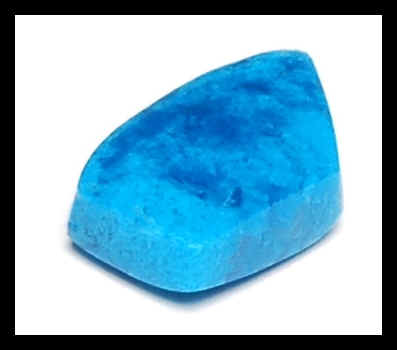
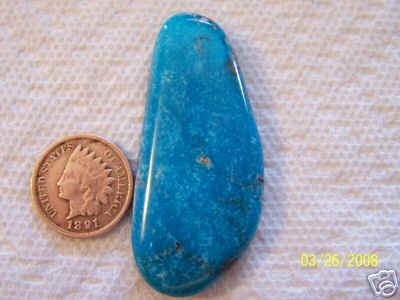
Ask where your turquoise comes from. Compare it with
the samples shown here to judge its authenticity.
|
Touring Turquoise Country in The Southwest Is Fun
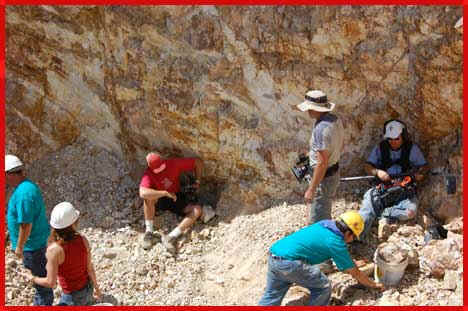
Tours of Mines:
$100 - Tonopah - Royston Turquoise Mine - with 2 week advanced notice. http://www.roystonturquoise.com/minetours.htm
http://upload.wikimedia.org/wikipedia/commons/d/d9/Turquoise_with_quartz.jpg
Another superb picture -
http://bp2.blogger.com/_pNvB5Dz3Nd8/R1fZrmgDmII/AAAAAAAAA10/AQ7DfH-uzj4/s1600-h/minerals_%2BVaTurquoise.jpg
Primary sources used for this web-page
are:
http://www.durangosilver.com/Nevadaturquoisemines.htm
- lists many new and very small mines.
http://www.e-pueblo.com/products/turquoise.shtml
http://nevada-outback-gems.com/Nevada_turq_mines/turquoise_mines_of_nevada.htm
Nice spider-web images from many mines: http://www.redstreakdesigns.com/turquoise%20files/turquoise/turquoise.html
http://www.nevadagem.com/pages/turquoise.html
http://www.durangosilver.com/turquoisemines.htm
http://www.skystonetrading.com/turquoise.asp
http://www.usturquoise.com/
He offers a convenient list of Arizona, Colorado, Nevada and New Mexico mines.
http://www.turquoiseamerica.com/minepage/minestory.html
-------------------------------------------------------------------------------------------------------------------------------------------------
TURQUOISE
SAMPLES
FROM
MANY DIFFERENT MINES
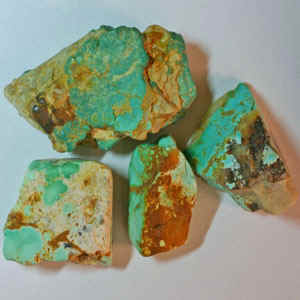
Ackerman Canyon - 30 miles NE of Austin, Nevada.
Not producing now. Stones from here
range from light blue to a translucent emerald greed. Green variscite also was
produced here.
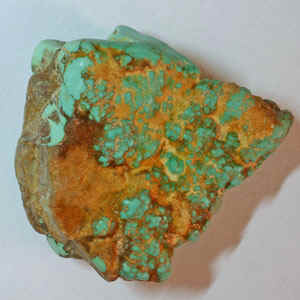
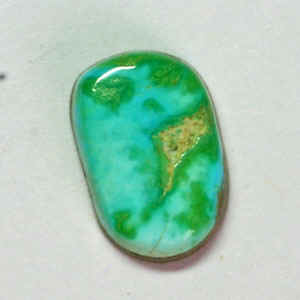
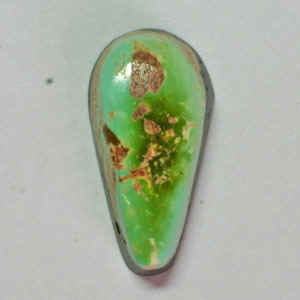
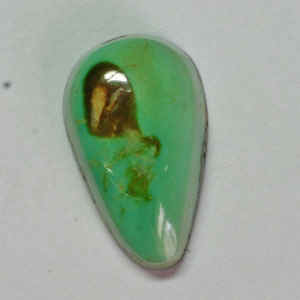
Ajax Turquoise Mine - South central
Nevada in the Royston area. New...Currently producing.
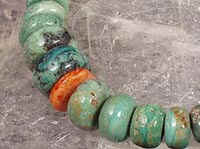
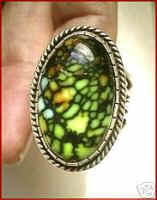
Colors vary. Some cabs show a light blue but a dark green with dark veins is more
common. The colors
are often intense and blues and greens can appear in the same stone. Read
some more of this
mine's history at http://www.turquoiseamerica.com/minepage/minestory.html
The mine is near Mina, NV
and is on the edge of Death Valley just above the oild town of Columbis which
produced tons of borax.
http://www.turquoiseamerica.com/minepage/minestory.html
 http://www.e-pueblo.com/products/turquoise.shtml http://www.e-pueblo.com/products/turquoise.shtml
 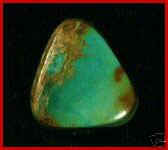 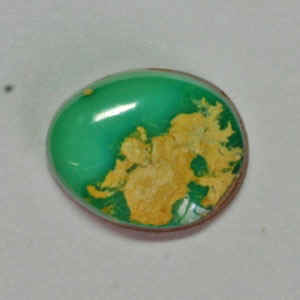
http://www.turquoiseamerica.com/store/56/store.php
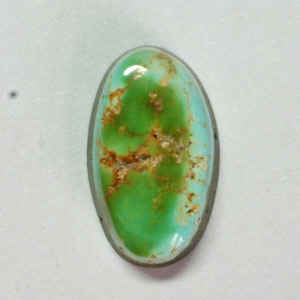 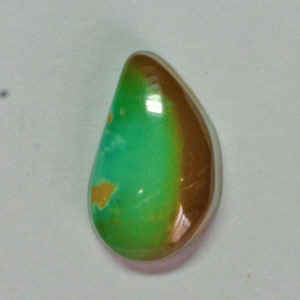
Austin - 12
miles South of Austin. Produced deep blue turquoise with a black matrix briefly
arounf 1970.
No pictures avaiable. If you have one, please send to
william_schmidt@hotmail.com
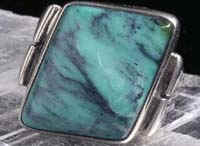
Apache Turquoise - Mine is near Tonopah and Austin Nevada. Only started producing two
years ago.
Variscite also is produced here.
|
|
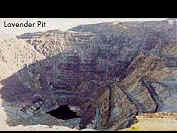
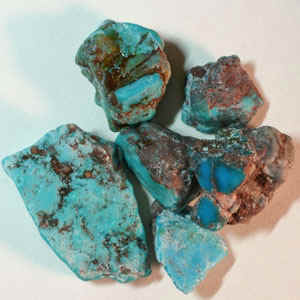
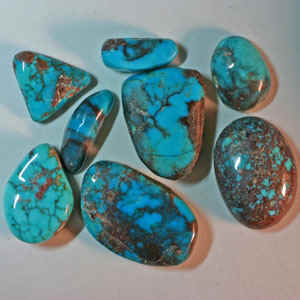
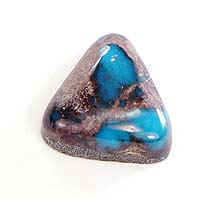
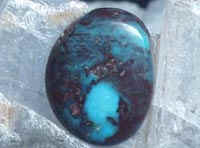
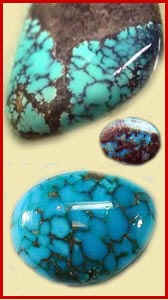
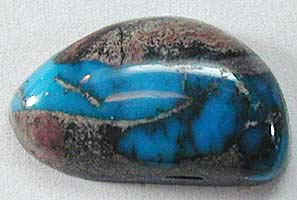
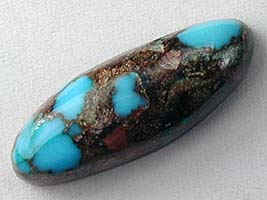
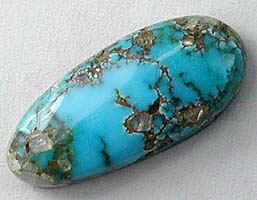
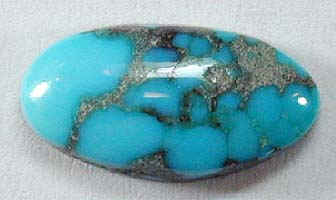
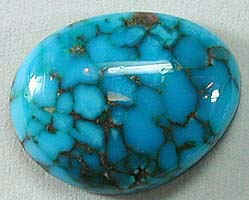
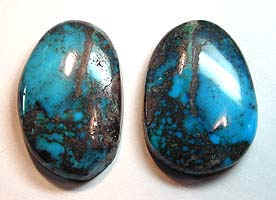
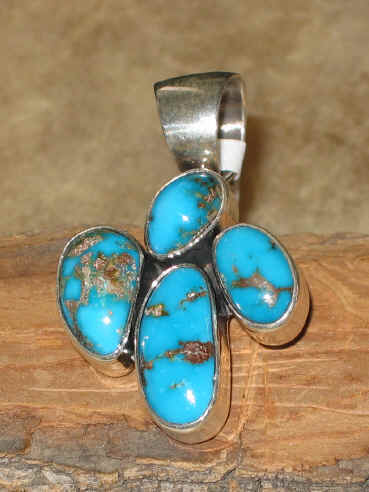
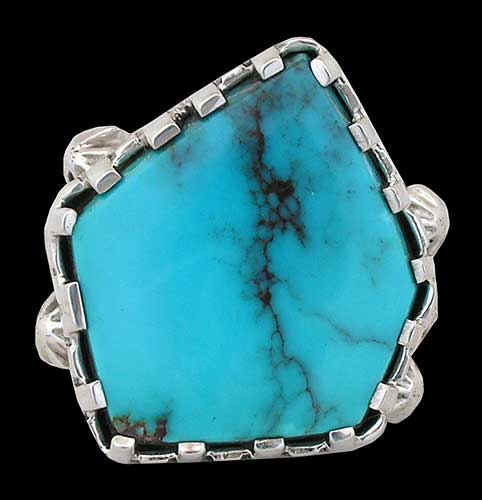
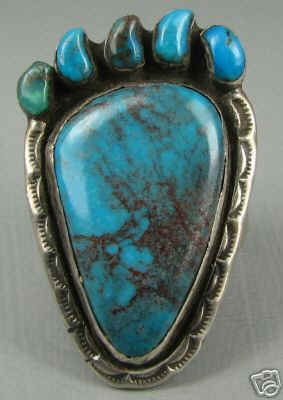
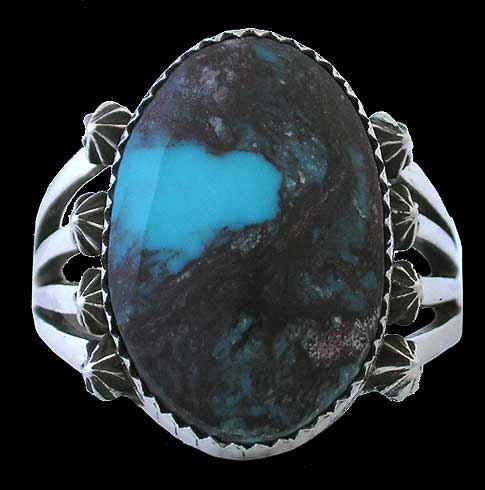
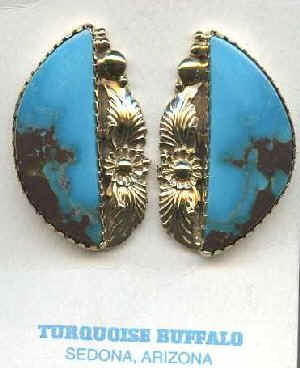
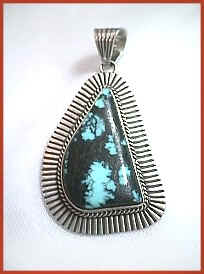
Bisbee Mine Distinctive deep blue and a uniquw lavender shaded dark brown
matrix.
Near Bisbee, Arizona. This
was a part of the Bisbee copper mine. Copper miners would
"high-grade" the turquoise stones. They would take the best turquoise and
stick it into their
pockets and sell it to turquoise hunters in bars int he evening. Bisbee turquoise
developed
a reputation for being very hard, finely webbed, and having a naturally brilliant blue
stone.
The highest grade of Bisbee was found at less then 100 feet, however, at Lavender Pit,
good
Bisbee was discovered at 2,000 feet. Bisbee is one of the most expensive turquoises
because
of its rarity, hardness and lustrous blue. Phelps Dodge has declared Bisbee
depleted and buried the mine
under 50 feet of dirt to prevent people from hurting themselves in the dark mines.
See http://en.wikipedia.org/wiki/Bisbee_Blue
http://www.indianvillage.com/arizonaturquoisemines.htm
http://www.turquoiseamerica.com/minepage/minestory.html
See images at http://www.redstreakdesigns.com/turquoise%20files/turquoise/turquoise.html
http://www.usturquoise.com/Mine_Information.php
$699 http://www.silversun-sf.com/custom/items/p236.htm
$165 http://www.twinrocks.com/products/5876-Navajo-Pentagon-Shaped-Bisbee-Turquoise-Ring-Eugene-Livingston.html
$225 http://www.twinrocks.com/products/5832-Navajo-Silver-Bisbee-Turquoise-Ring-Toby-Henderson.html
 $425 $425
Set in Gold - $766
http://turquoisebuffalo.com/page/TBG/PROD/2BT/GJA22
http://www.skystonetrading.com/item.asp?ItemID=31498
|
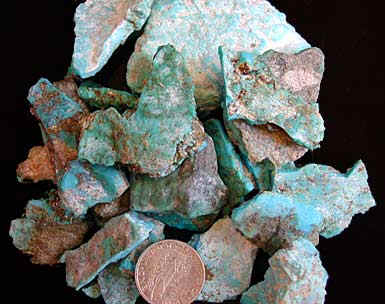
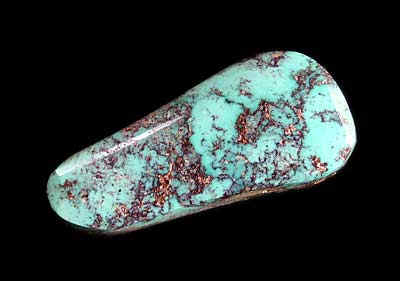
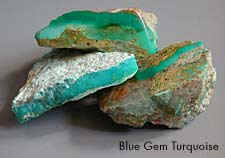
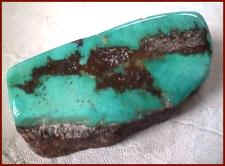
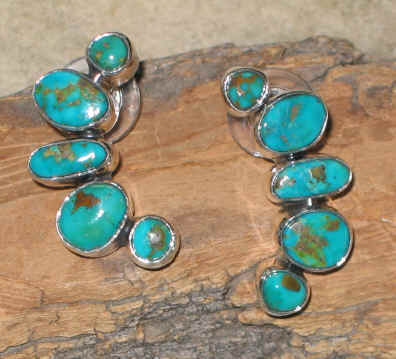
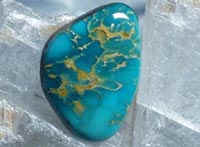
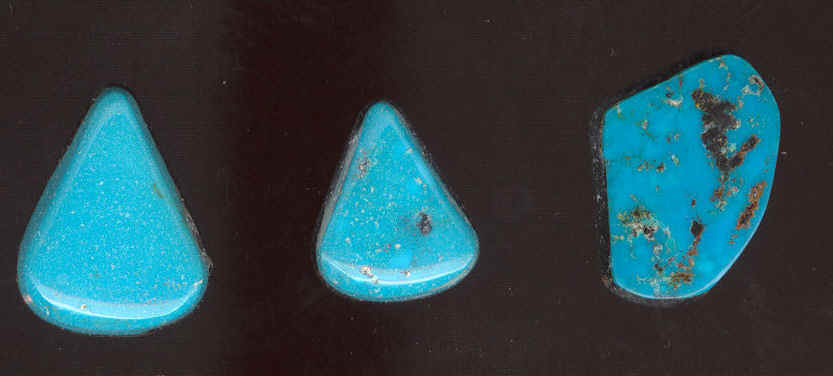
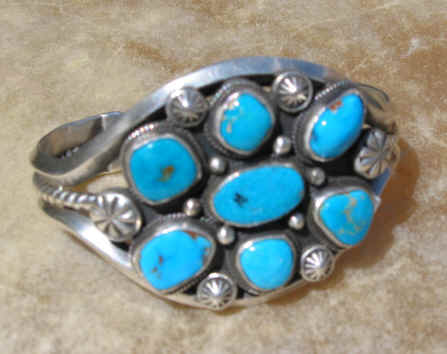
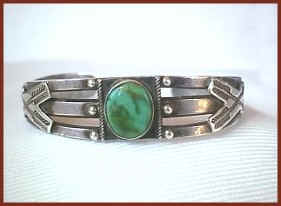
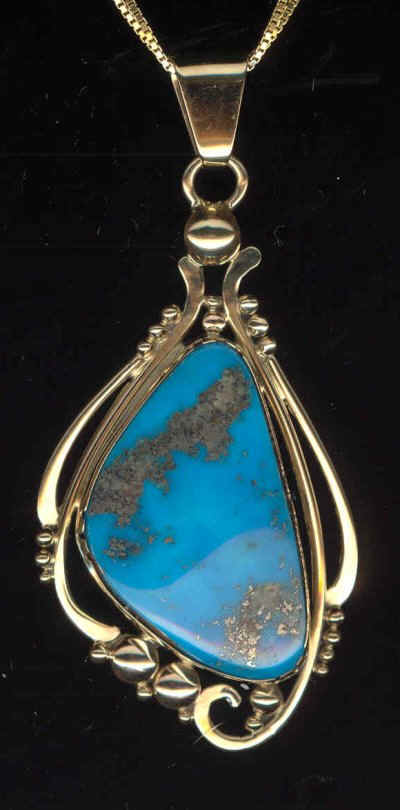
Blue Gem Mine - near Battle Mountain, Nevada. Starting in 1934, this mine produced
turquoise
that occasionally combined bright blues, greens and brown in the same stone. These
colorful combinations
are rare and highly valued by collectors. The mine has been closed for twenty years.
The deepest regions
of the mine tended to have the deepest blue stones.
See - http://www.e-pueblo.com/products/turquoise.shtml
http://www.redstreakdesigns.com/turquoise%20files/turquoise/turquoise.html
http://www.nevadagem.com/pages/mineinfo2.html
http://www.nevadagem.com/pages/categorypages/turqroughmix3.html
http://www.nevadagem.com/pages/categorypages/nevadamines.html
http://www.nevadagem.com/pages/mineinfo2.html
http://www.durangosilver.com/Nevadaturquoisemines.htm
$239 - http://www.silversun-sf.com/custom/items/e137.htm
$704 - http://www.silversun-sf.com/custom/items/b126.htm
http://www.skystonetrading.com/item.asp?ItemID=31556
 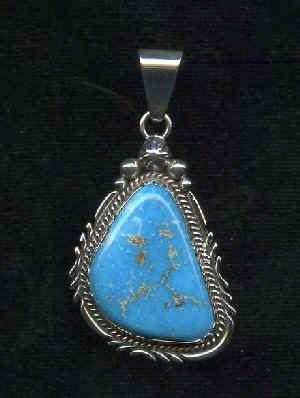
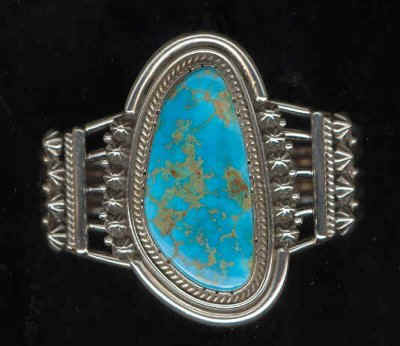
$1,618 http://turquoisebuffalo.com/page/TBG/PROD/blue-gem/GJ80
Blue Ice
- Nevada. Blue Ice Turquoise is from a new find discovered last year by a prospector
named
William Murdoch, here is what he said "I found this near Yerington, Nevada and
named it partly because it looked
like blue ice and partly because I had to break through a layer of ice to get to
it."
(Source: http://www.durangosilver.com/Nevadaturquoisemines.htm
Blue June
- Northern Nevada.
See http://www.turquoiseamerica.com/minepage/minestory.html
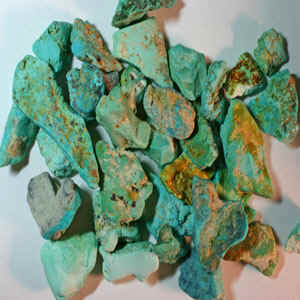 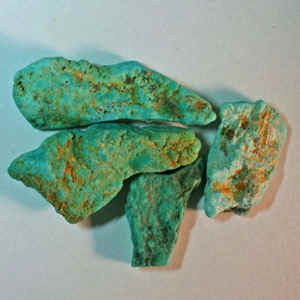
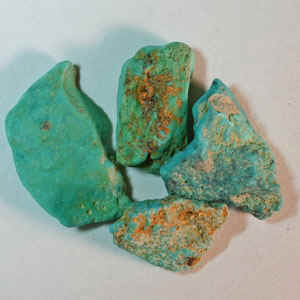 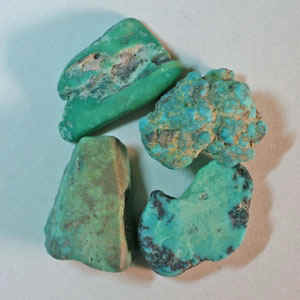
Blue McGinness
- Nevada.
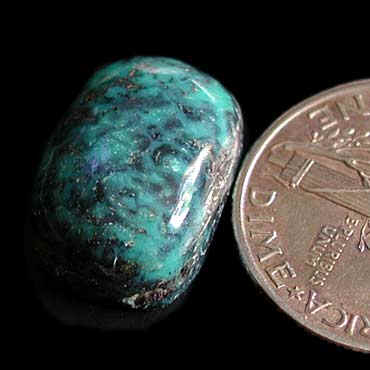 $2.50/Ct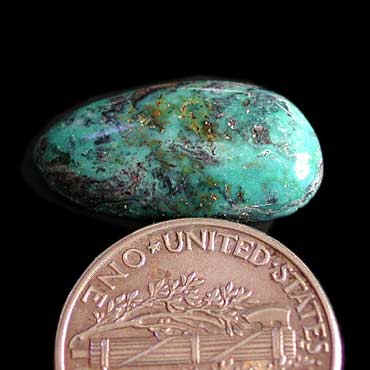
http://www.nevadagem.com/pages/categorypages/nevadamines.html
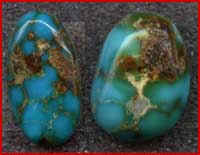
Blue Thunder - "An exceptionally fine and beautiful turquoise. Intense, vivid blue
interspersed
with amazing Redish/Brown matrix in a very intricate spiderweb pattern. This
Blue Thunder turquoise
with was found in very minimal quantity in the early 1980’s and is very
seldom seen today. It is highly
sought after by high end contemporary jewelers and collectors, and are rarely
available."
( Source: http://www.durangosilver.com/Nevadaturquoisemines.htm
)
Blue Thunder
- The stones from here are a combination of turquoise and chrysicola in the same rock.
See - http://www.durangosilver.com/Nevadaturquoisemines.htm
Blue Wind -
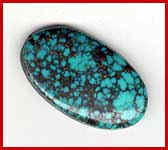
"Probably one of the finest, most unknown Nevada spiderwebs ever. There was very
little of
this stone to come out ...Deep blue with a black spiderweb... A
Spider web second only to Lander Blue!
http://www.durangosilver.com/Nevadaturquoisemines.htm
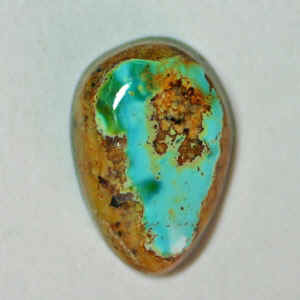
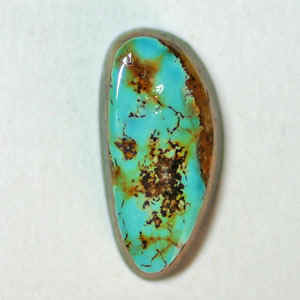
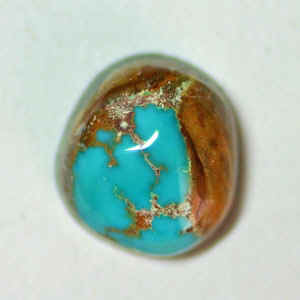
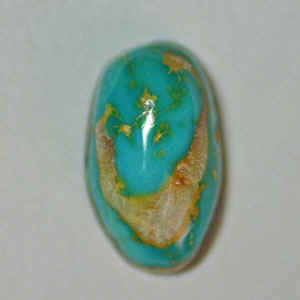
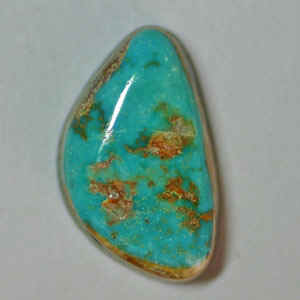
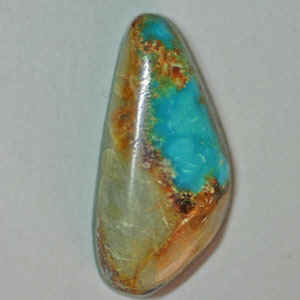
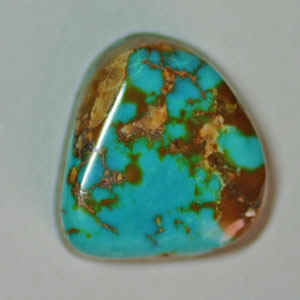
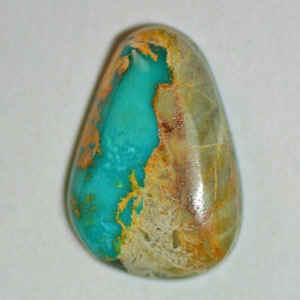
Bonanza - Nevada.
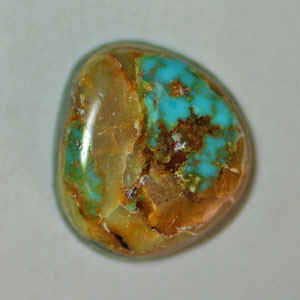
I remember seeing lots of turquoise that looked like this in the early 1970s. I
loved the wild
mix of colors. At the time these sold for under 25 cents to
60cents a carot. The collection of stones
here is offered at http://www.turquoiseamerica.com/store/82/store.php
   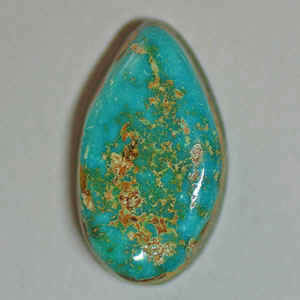 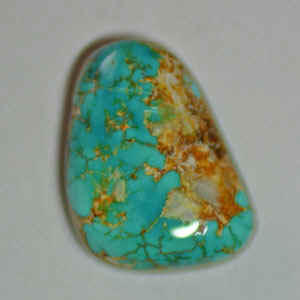
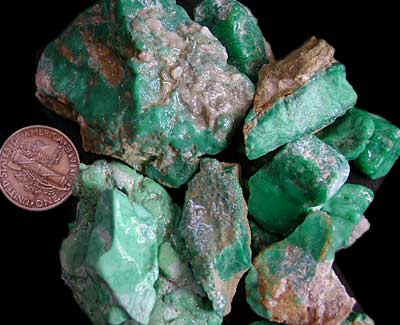
Broken Arrow - In
Canelaria Mining area outside of Mina, Nevada.
This is Veracite mixed with Turquoise.
http://www.nevadagem.com/pages/categorypages/turqroughmix3.html
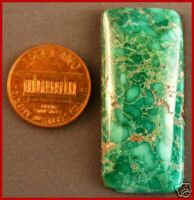 $60.
Ebay. $60.
Ebay. 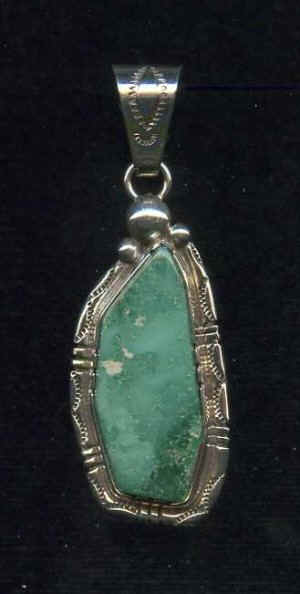
Turquoise with Variscite.
http://turquoisebuffalo.com/page/TBG/PROD/broken-arrow/SPA169
http://stores.ebay.com/Durango-Silver-Company
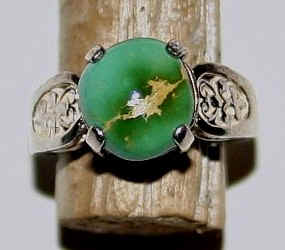
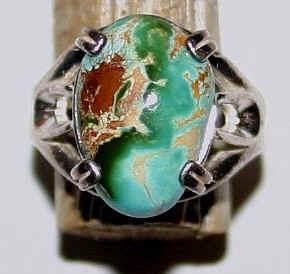
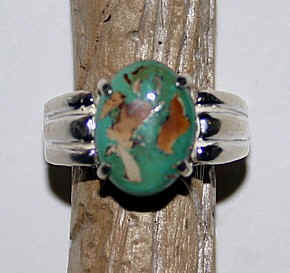
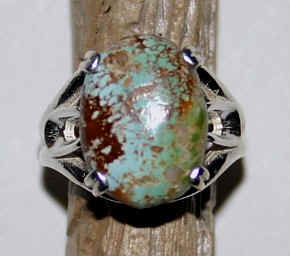
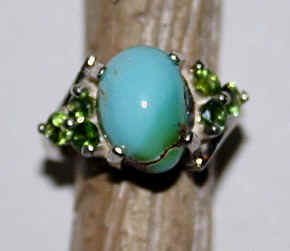
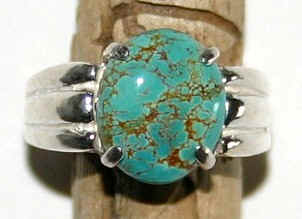
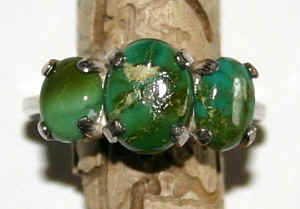
Bunker Hill - See Royston. Esmeralda County of Nevada.
http://nevada-outback-gems.com/Finish_turq_jewel/premium_turquoise_rings.htm
|
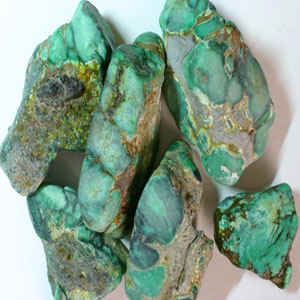
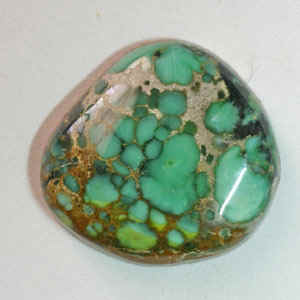
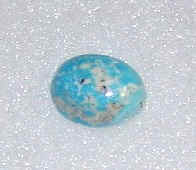
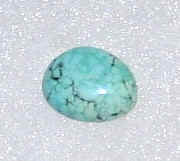
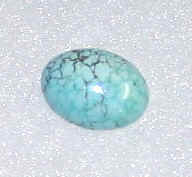
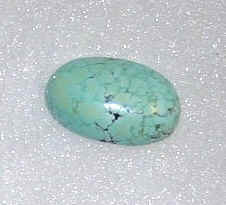
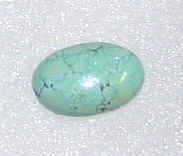
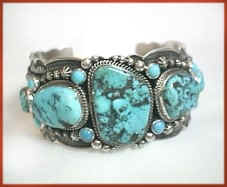
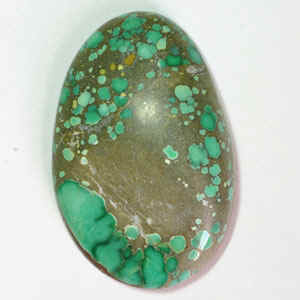
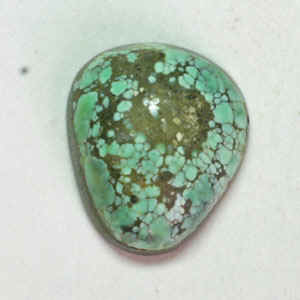
Candelaria Area,
Nevada - 50 miles west of Tonopah. These stones have an irregular, non-webbed, black
or brown matrix. The blue is duller and the matrix lacks
definition.. It is readily available now.
See http://www.e-pueblo.com/products/turquoise.shtml
Some of them are extraordinarily fine. Look
at how deep blue the spider-webbed stone below is. Green
verascite often comes from the same mines and the stones
are often a mix. Verscite is actually rarer than turquoise and
takes a bright polish. .
http://www.turquoiseamerica.com/minepage/minestory.html
See spider web images at
http://www.redstreakdesigns.com/turquoise%20files/turquoise/turquoise.html
http://www.nevadagem.com/pages/mineinfo3.html
Candelaria Hills http://www.turquoiseamerica.com/minepage/minestory.html
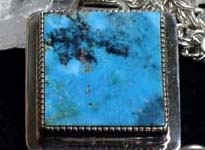 
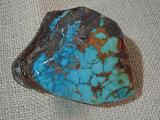
Potosi Gold-Silver Mine in Esmeralda County, NV.
See http://nevada-outback-gems.com/turquoise_cabs/cut_turquoise_Candelaria.htm
http://www.usturquoise.com/
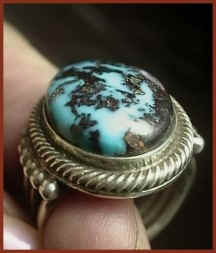 $338
$338
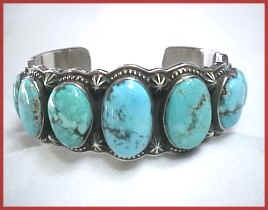
http://www.skystonetrading.com/item.asp?ItemID=31474
http://www.skystonetrading.com/item.asp?ItemID=31469
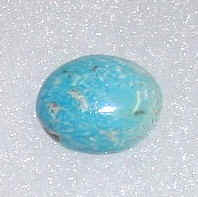  
http://www.skystonetrading.com/items.asp?type=TradJewelry&orderby=New
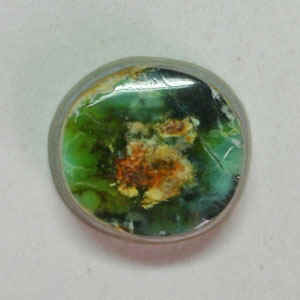
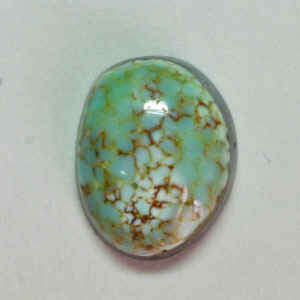
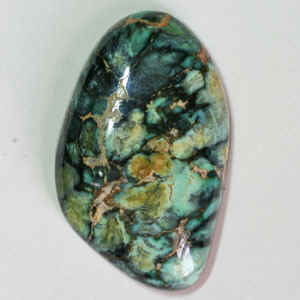
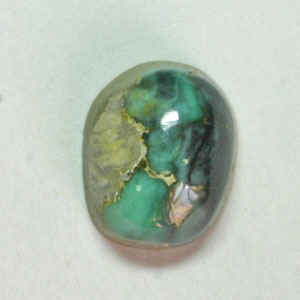
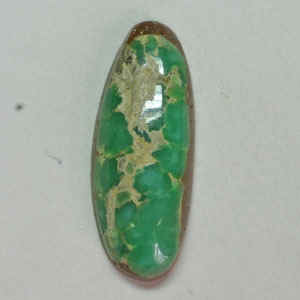
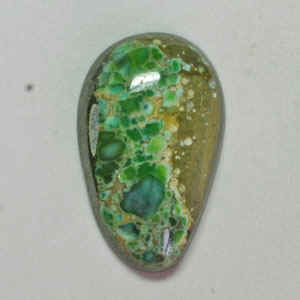
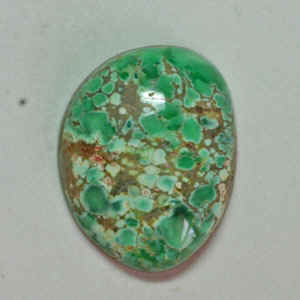
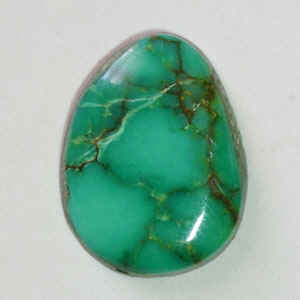
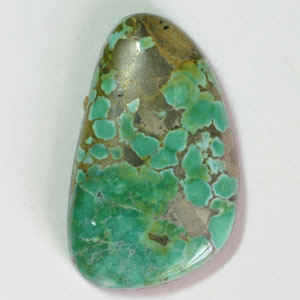
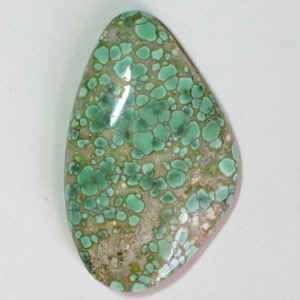
The Candelaria mine also produced some beautiful green tuequoise.
The stones below sell for about $1/ct at http://www.turquoiseamerica.com/store/121/store.php
 |
|
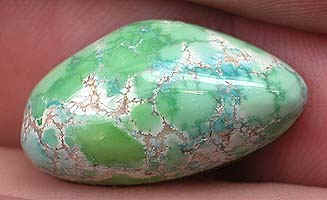
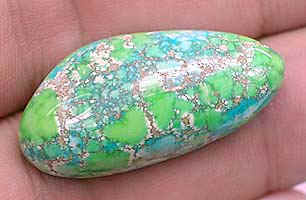
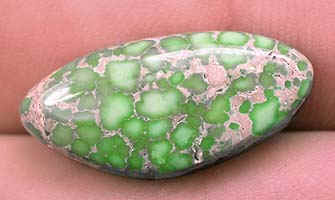
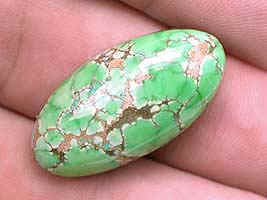
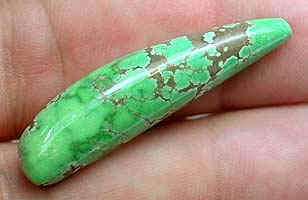
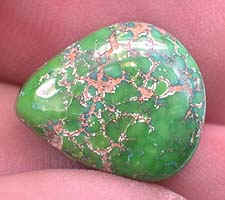
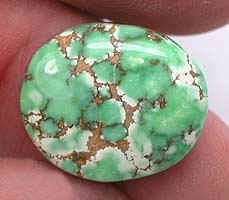
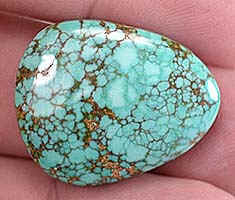
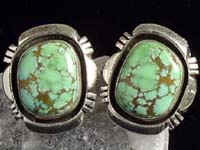
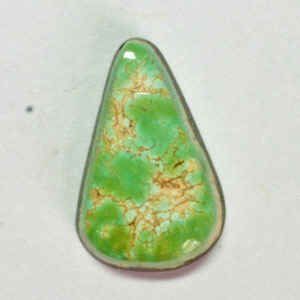
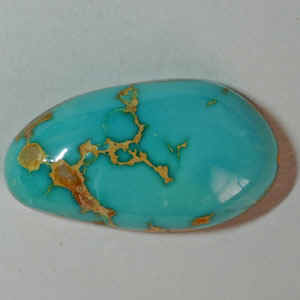
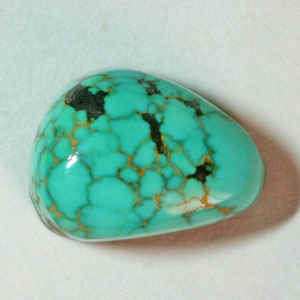
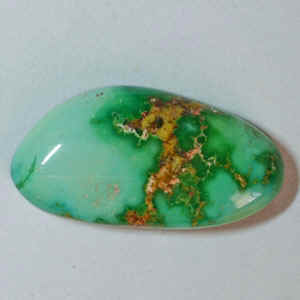
Carico Lake #6. Not
currently a producing mine. This mine is in Lander County, Nevada. The
bright, clear, iridescent green is fresh, Spring-like. This is due to its
zinc content. Carico is primarily a gold
producing mine, but individual turquoise miners may lease parts of it. There are
actually a number of important
turquoise mines in the Carico Lake area: Red Mountain, Blue Elephant,
Nevada Blue and Northern Lights.
The Aurora is the largest mine. When prices rose in the 1970s, large scale
mining was initiated and very
large quantities of turquoise was brought to the market.
For more details at http://nevada-outback-gems.com/Nevada_turq_mines/turquoise_mines_of_nevada.htm
See - http://www.e-pueblo.com/products/turquoise.shtml
http://www.nevadagem.com/pages/mineinfo3.html
Lime green tuequoise (also called
Fausite, though it is turquoise) 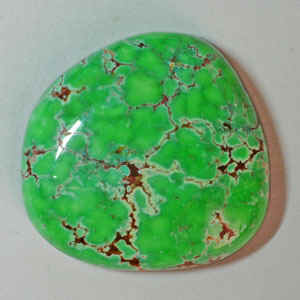
was not as popular in the 1970s as
Blue stones were. ( http://www.turquoiseamerica.com/minepage/minestory.html
)
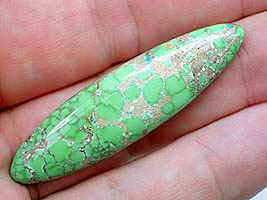     
http://www.turquoiseamerica.com/store/116/store.php
http://www.turquoiseamerica.com/minepage/minestory.html
|
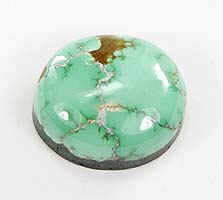
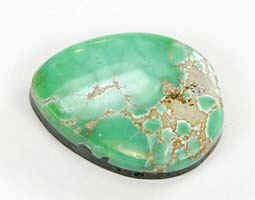
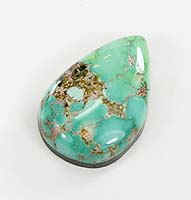
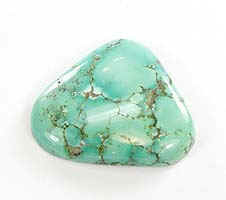
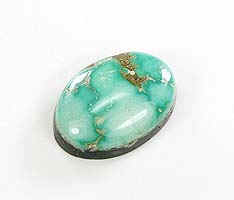
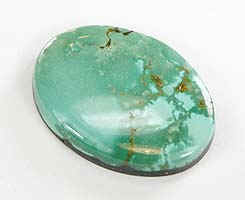
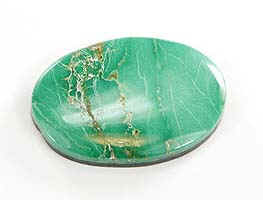
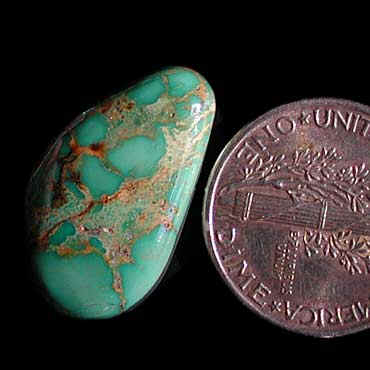
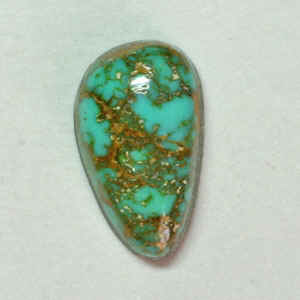
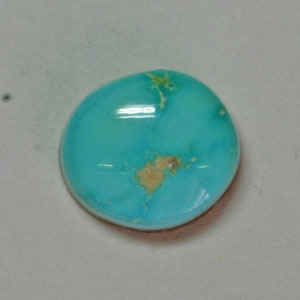
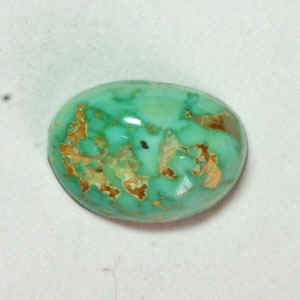
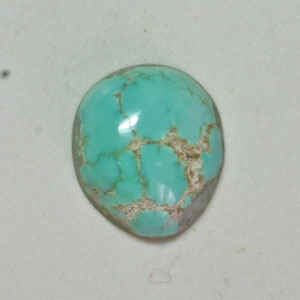
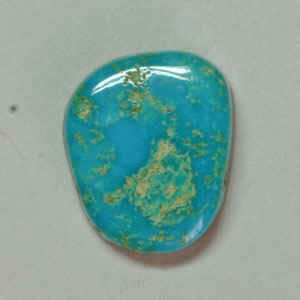
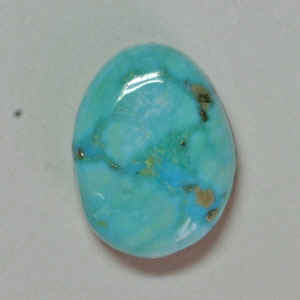
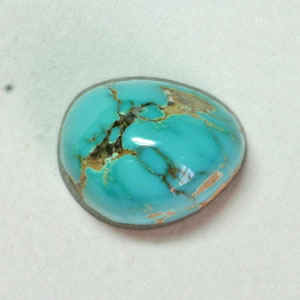
Carico Lake mine
have not been producing any rough for a very long time. Gold settings bring out the
matrix's colors.
These stones have a distinctive green.
 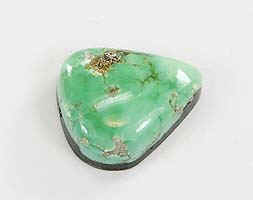 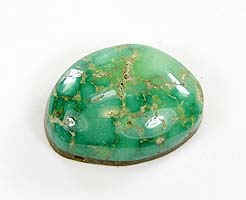
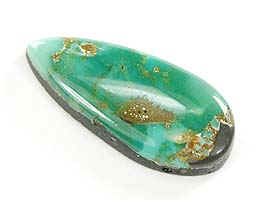 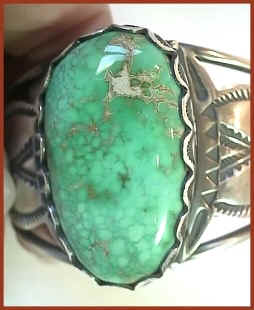 bracelet sold for $680.
http://www.skystonetrading.com/items.asp?type=TradJewelry&orderby=New
http://www.nevadagem.com/pages/categorypages/nevadamines3.html
http://www.turquoiseamerica.com/store/114/store.php
http://www.turquoiseamerica.com/store/114/store.php
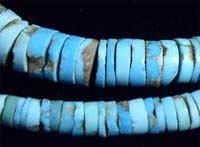
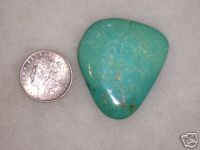
Castle Dome - Globe,
Arizona AKA - Pinto Valley. Rare. These came from a copper mine about
five miles west of Miami, Arizona. The copper mine was opened in 1943 and the
mine was closed in 1953.
Miners were allowed to dig for chunks that varied from a bluish-green to a sky blue
on their days off. Much
of this turquoise was treated. In the 1970s, this was the second biggest
producing turquoise mine in Arizona,
yielding 9,000 pounds a month.
http://www.nevadagem.com/pages/mineinfo4.html
 $279.00
on Ebay. $279.00
on Ebay.
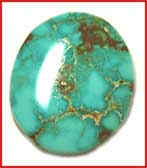
Cave Creek - Arizona This
is a new source. It's small, run by a father and son. mo
http://www.durangosilver.com/arizonaturquoisemines.htm
|
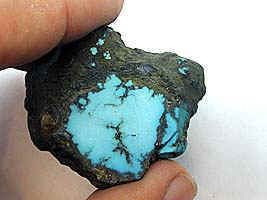
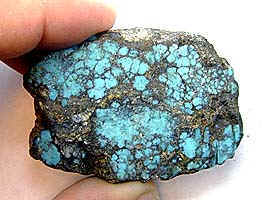
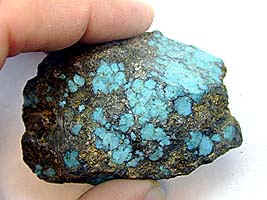
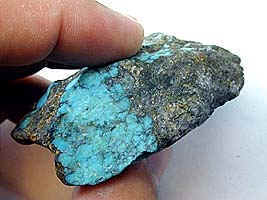
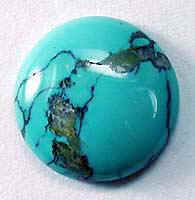
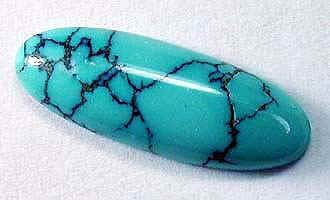
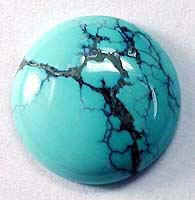
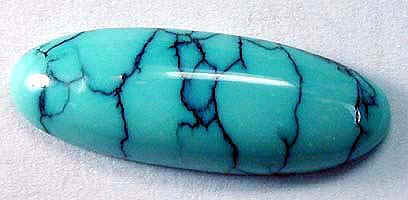
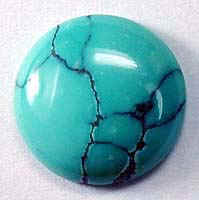
Chinese Turquoise
Lots of it has come on market in recent years. As hard as any in
America, it takes a
high polish. "Turquoise today from China
accounts for over 60% of the stones sold in the United States, due
to the scarcity of American turquoise. There is an irony to the abundance of Chinese
turquoise in America as most
all of the China turquoise sold is stabilized with plastic or treated in some way thus
making the availability
of natural Chinese turquoise rare in today's market." http://www.nevadagem.com/pages/mineinfo5.html
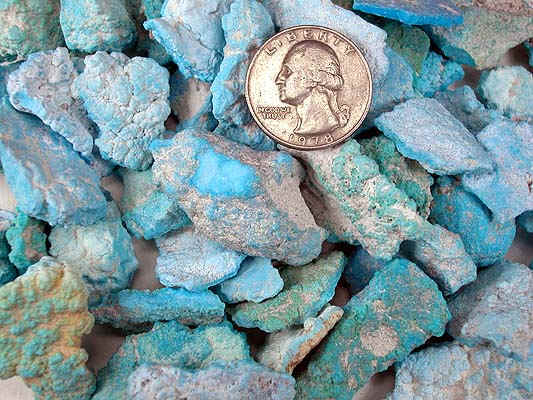 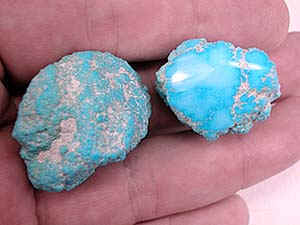 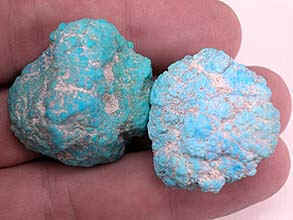
Rough Chinese turquoise is
available by the pound for $600.00/Lb
(See http://www.cabbers.com/rough/turquiose/china_blue_turquoise.shtml
and
http://www.cabbers.com/rough/turquiose/chinese_turquoise_rough.shtml
)
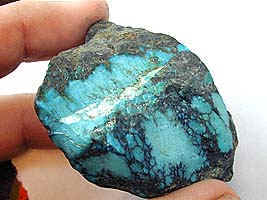 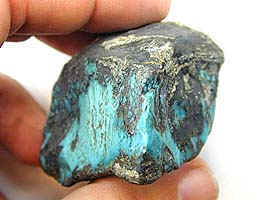 
Treated Chinese Turquoise
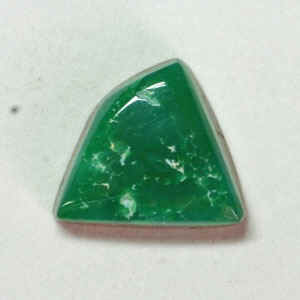
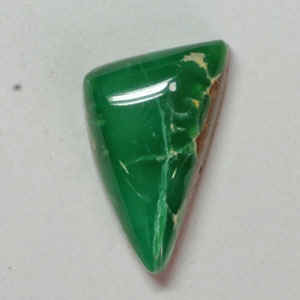
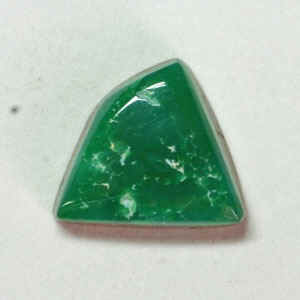
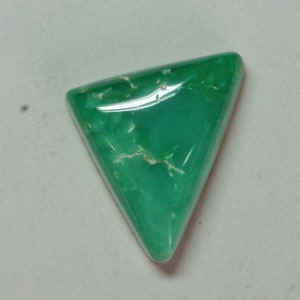
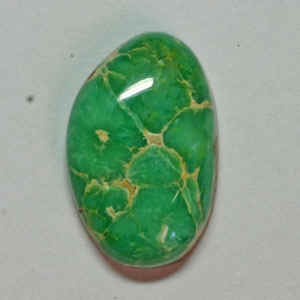
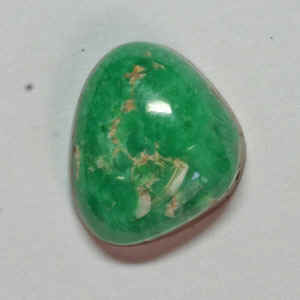
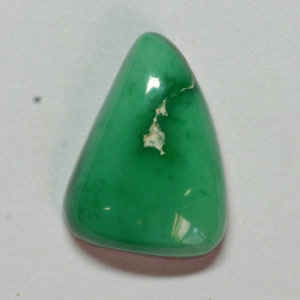
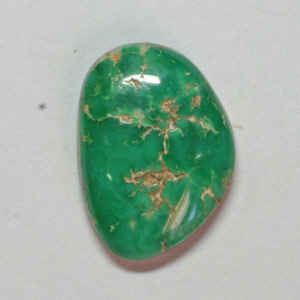
Chipmonk - Esmeralda County, Nevada This mine produces translucent green
stones.
(Also known as Broken Arrow Mine)
See description here - http://www.turquoiseamerica.com/minepage/minestory.html
|
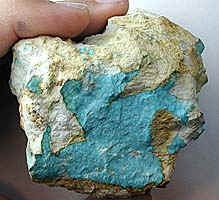
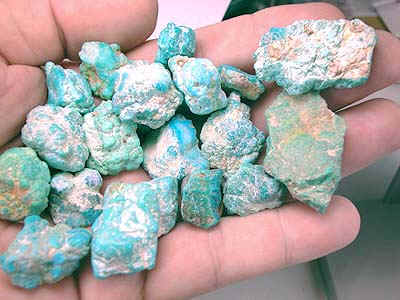
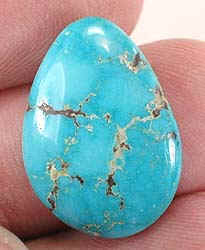
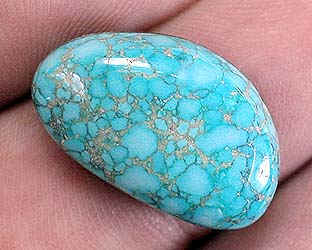
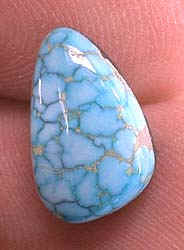
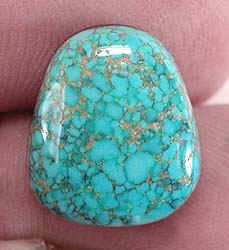
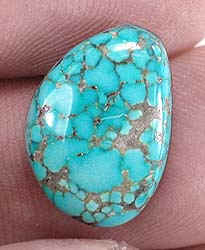
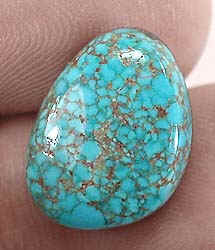
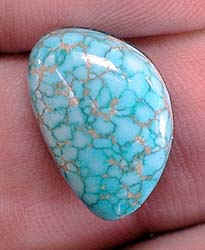
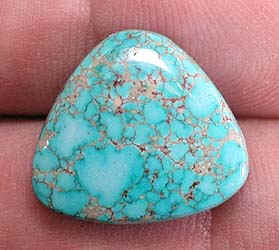
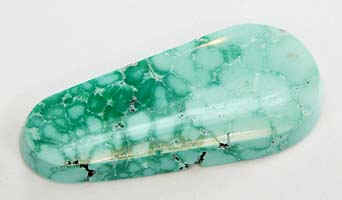
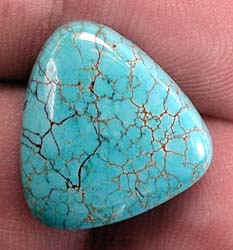
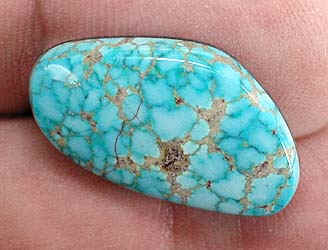
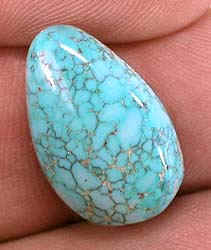
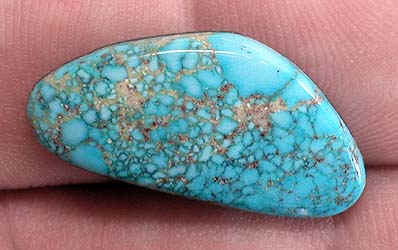
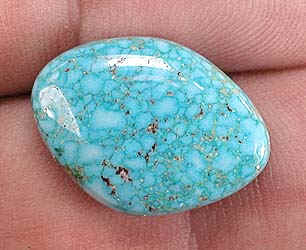
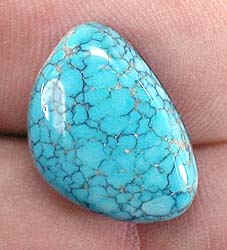
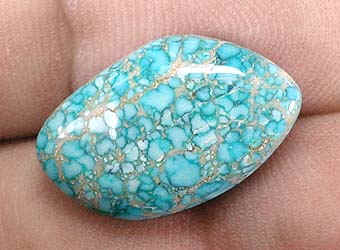
Fox #3
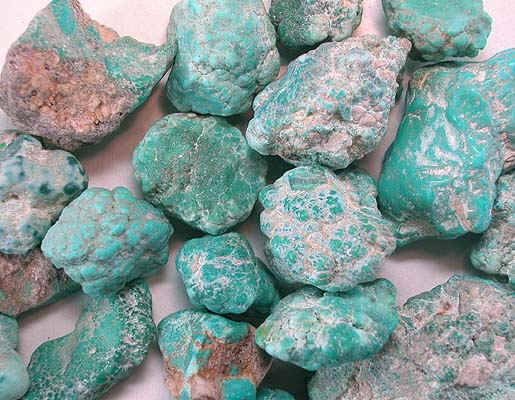
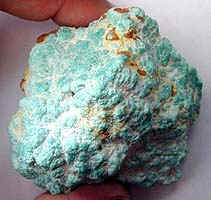
- (Also known as Cortez) In Lander County near Crescent City, Nevada.
The mining was discontinued in early 1970s. A major producer for a century. "It
is said to have produced more
turquoise than all other mines in Navada put together." http://www.nevadagem.com/pages/mineinfo7.html
Naturally a greenish sky blue, its stones often have a spider web matrix. Uncut raw
turquoise from this mine sells
for $250/Lb to $350/Lb.
The Fox turquoise mines are very productive. Different sites of Fox turquoise
deposits are named Fox, White Horse,
Green Tree and Smith have distinctive shades of blue and green turquoise. Much
of the blue Fox turquoise comes
from the White Horse mines.
See http://www.e-pueblo.com/products/turquoise.shtml
http://www.cabbers.com/rough/turquiose/fox_turquoise_rough.shtml
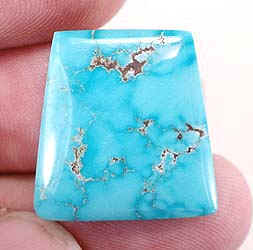
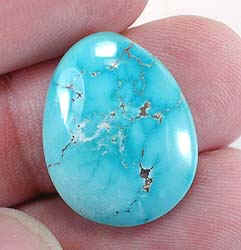
When cut, backed and polished, it currently is on sale for about $20/Ct to $30/Ct
Most stones have between 5 and 12 carats.
See - http://www.cabbers.com/cabs/turquoise/fox/fox_turquoise.shtml
   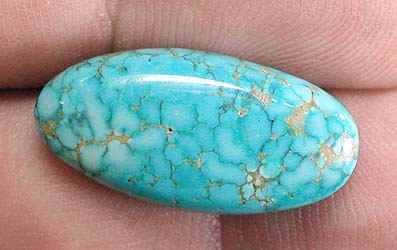
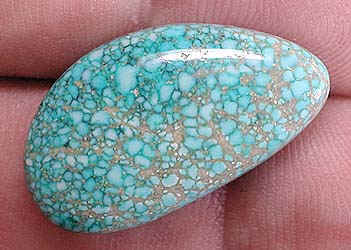 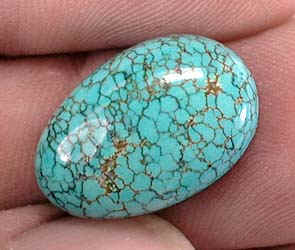
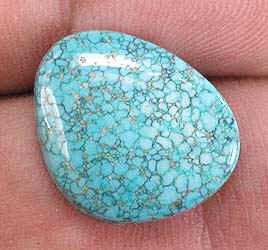 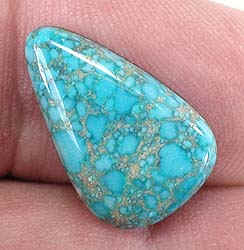
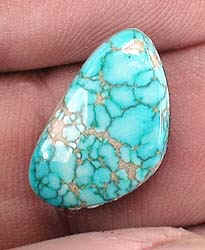 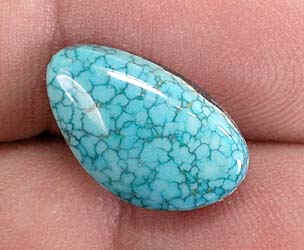 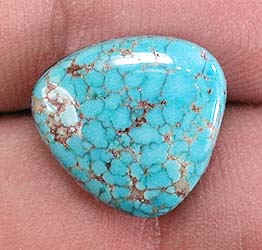
 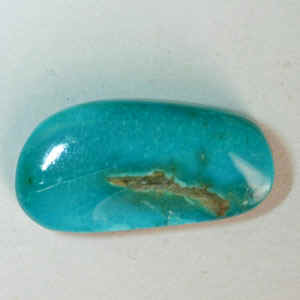 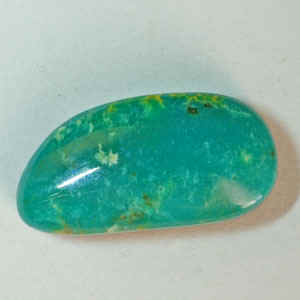 http://www.turquoiseamerica.com/store/601/store.php
Less expensive Fox turquoise.
$5/Ct.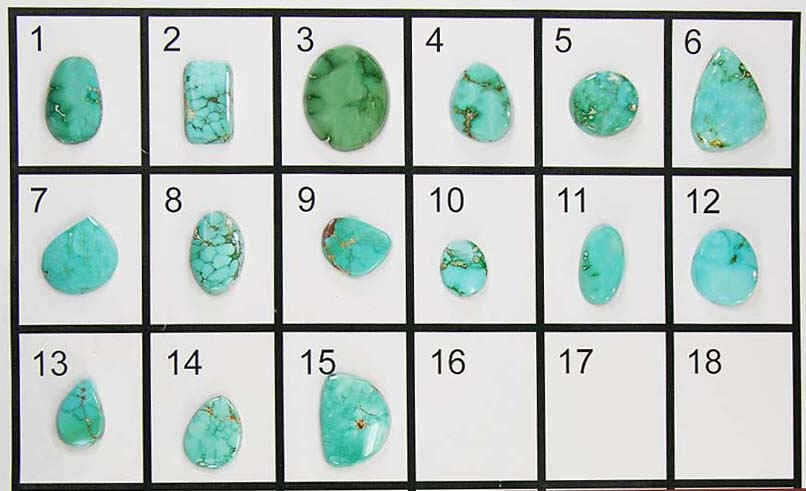
http://www.cabbers.com/cabs/turquoise/fox/fox_turquoise4.shtml
|
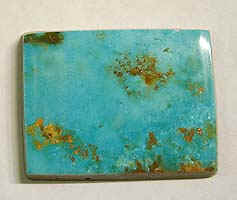
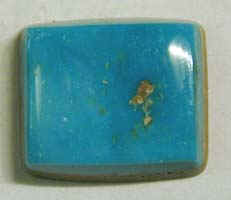
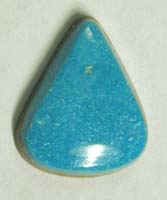
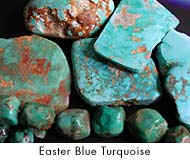
Easter Blue
|
Kingman,
Arizona Area - Northwestern Arizona. One of the largest turquoise mines.
High quality "Kingman blue"
is an industry standard. The intensity of the its deepest blue stones is
striking. Ithaca Peak produced many of the best
specimens in the 1960s. The vein has long been exhausted. Closed
in 1972, the Kingman mine was re-opened in 2004.
"The new owners of the
copper mine have contracted to dump anything with turquoise veining or nuggets into trucks
for Marty Colbaugh Processing. About 95% of Kingman is stabilized which makes
it very affordable. Of that stabilized
stone, 50% is then shipped to China for cutting; the other half is sold in
the rough to American artists and those in the
turquoise trade. The remaining 5% of the Kingman turquoise stays in its
natural state. The Kingman mine currently
yields about 1600 pounds of rough stone per month with 2000 pounds being the
highest yield yet. Therefore, Silver
Sun has a ready supply of both natural Kingman and stabilized Kingman to use for
our jewelry.
(Source: http://www.silversun-sf.com/turquoise_info/ajax.htm
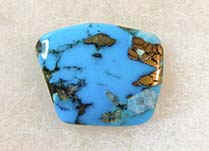
) The two stones
to the right just below are claimed to
be Kingman,
too. They are at variance with what I recognize to be Kingman.
http://www.omegagrafix.com/turq.htm
See also http://www.nevadagem.com/pages/mineinfo10.html
These stones are also green.
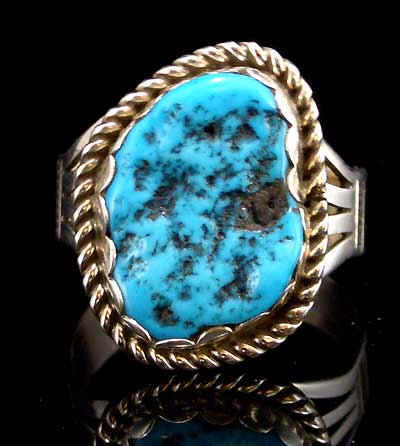 Ebay
$83.
Ebay
$83.
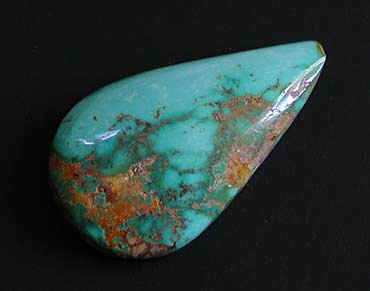 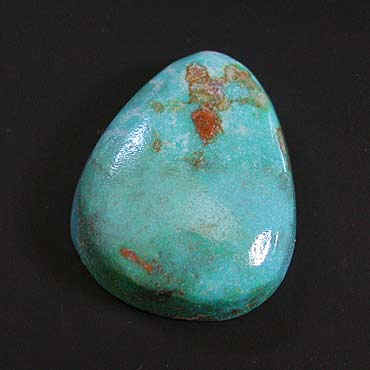
Newer Kingman
readily available.
4.5 Ct. $7.50 http://www.theturquoisechick.com/specimens.htm
|
Kingman Arizona Area. Below
is new material from Ithaca Peak in Kingman. Note the matrix has
Pyrite and Quartz crystals. These mines have not produced much turquoise since the
1970s. I paid $200/Lb in 1974.
It is now $200/ounce.
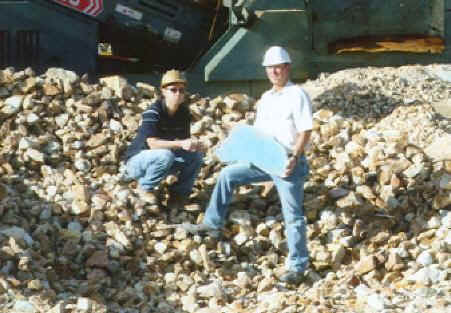
http://www.indianvillage.com/kingmanturquoise.htm
See - http://www.cabbers.com/rough/turquiose/old_kingman_turquoise.shtml
Kingman - "Old Man Mine"
$10/Ct. This from a small mine on Gem Mountain. Very hard and blue with some green
"marbling"
http://www.cabbers.com/cabs/turquoise/kingman/kingman2.shtml
The turquoise from this area in the 1960s usually had a black matrix.
http://www.indianvillage.com/arizonaturquoisemines.htm
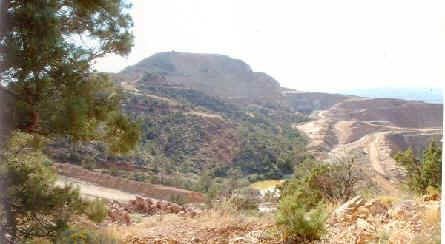
The Kingman mine from a distance. |
King's Manassa - East of Manassa, Colorado. This
was mined for centuries before Europeans came..
Today King’s Manassa
turquoise is "seen in an attractive green color with a beautiful golden matrix."
http://www.nevadagem.com/pages/mineinfo9.html
|
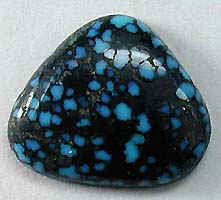
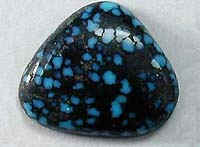
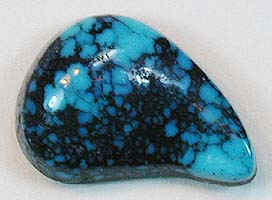
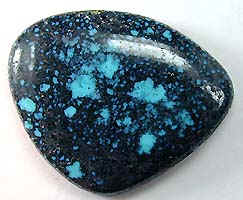
Landers County Blue.
Very rare, sought after and very highly valued.
Only a 104 pounds of this
deep blue, spider-webbed turquoise has been found since the original discovery in 1973.
See the private collection
of Marvin Symes, one of the three original owners of this mine.$100/Ct There
were no larger veins or zones of
turquoise.
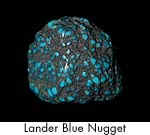 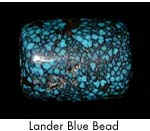 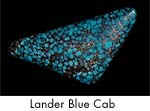
"Today, because of its rarity and value, there seems to
be more Lander Blue for sale than was ever mined.
With very little provenance available when buying beautiful Lander Blue, this material has
truly become a
case of ”Buyer Beware.” http://www.nevadagem.com/pages/mineinfo11.html
See - http://www.cabbers.com/cabs/turquoise/landers_turquoise.shtml
A blackjack dealer, Rita Hapgood,
who was picnicking at Indian Creek, discovered Lander Blue. It proved to be a
"hat mine", meaning that one could
put a hat over the deposit. She claimed the mine as the Mary Louise Lode
Mining Claim and later sold the claim
to Marvin Syme and Henry Dorian. They founded the Lander Blue Turquoise Corporation and
they worked the
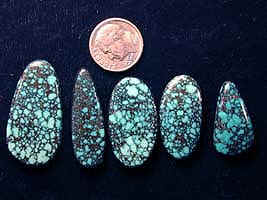
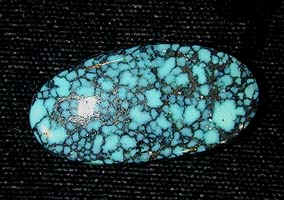
deposit until its depletion. Lander Blue comes from a mine located between Battle Mountain
and Tenabo in northern
Nevada. Note its dark to light blue color and tightly laced black, spider web
matrix. It is stunning. Because of its
beauty and very limited availability, due to closure of the mine, Lander Blue is a highly
collectible turquoise worthy
of investment. Lander Blue turquoise is very probably the most famous and expensive
of the American turquoises.
See more spider web images at
http://www.redstreakdesigns.com/turquoise%20files/turquoise/turquoise.html
http://www.cabbers.com/cabs/turquoise/landers_turquoise.shtml
http://www.e-pueblo.com/products/turquoise.shtml
http://www.cabbers.com/cabs/turquoise/landers_turquoise.shtml
 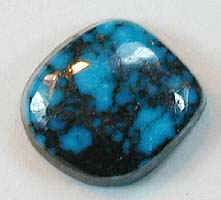 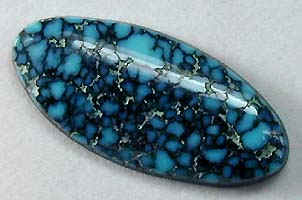
http://www.cabbers.com/cabs/turquoise/landers_turquoise.shtml
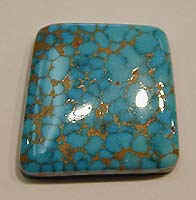 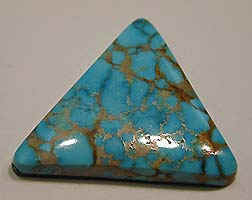
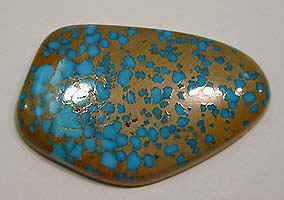 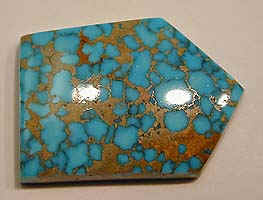
Lander's County #5 http://www.cabbers.com/cabs/turquoise/landers_turquoise.shtml
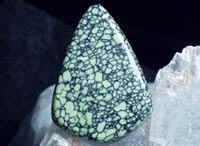
New Lander turquoise is being mined near the
Lander Blue Mine but has a green to yellow-green color, often with a
beautiful dark spiderweb matrix. ( http://www.e-pueblo.com/products/turquoise.shtml
)
Last Chance
- A small claim in Lander County Nevada. Very rare. Deep blue and black
spiderweb.
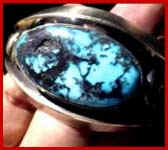
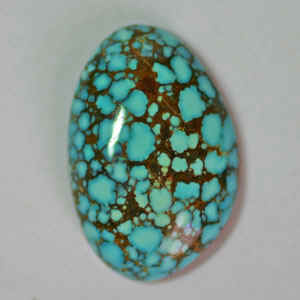
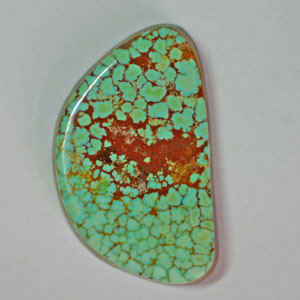
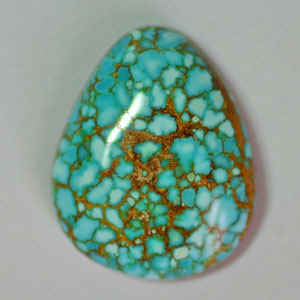
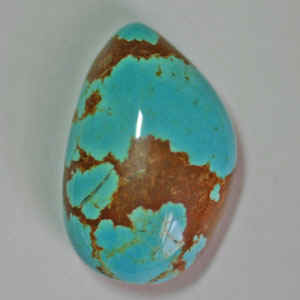
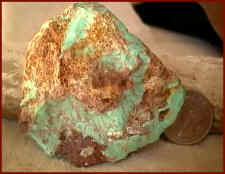
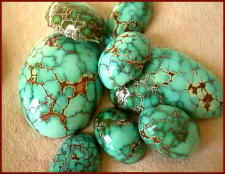
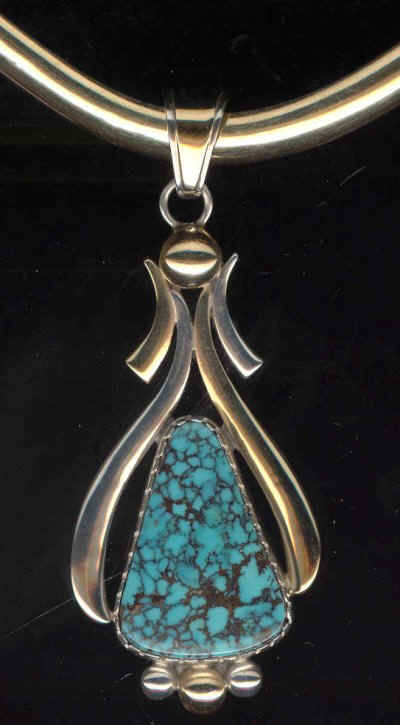
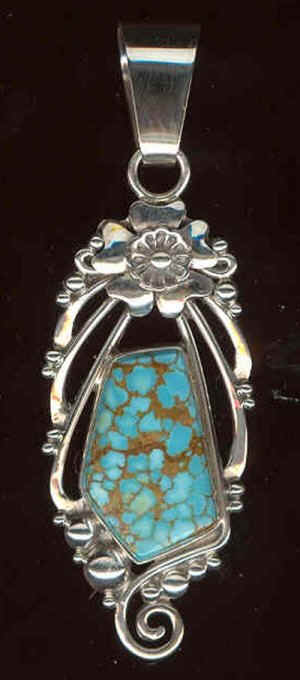
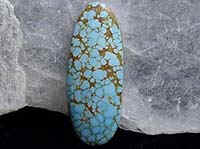
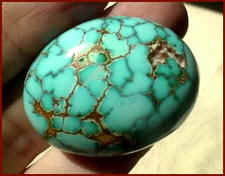
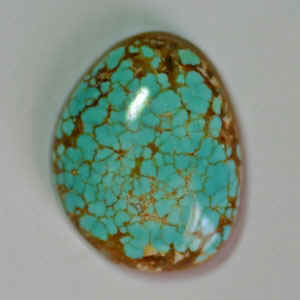
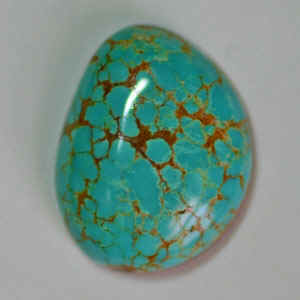
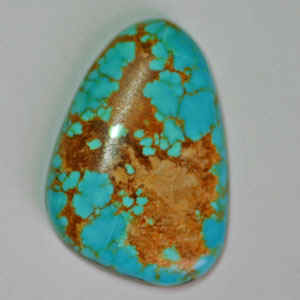
Number #8 In Carlin (northern) Nevada. Now
exhausted, the mine produced some of the largest nuggets.
Often these have a large spider web matrix ranging from reddish brown to black.
First mined in 1929, it was depleted
in 1961. Approximately 5,000 pounds were mined between 1929-1933. In 1950 a nodule
weighing 150 pounds
was found. It is now at the Covered Wagon in Old Town Albuquerque, New
Mexico. "The host rock is intensely,
naturally altered quartz monzonite shale and thinly beaded black chert.
( http://www.e-pueblo.com/products/turquoise.shtml
http://www.silversun-sf.com/turquoise_info/ajax.htm
)
http://www.turquoiseamerica.com/store/161/store.php
http://www.skystonetrading.com/turquoise.asp
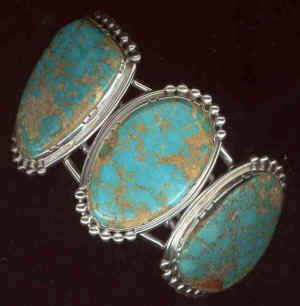
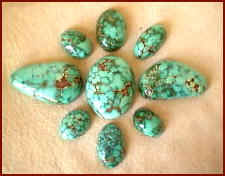
The stones from this mine vary from "light
blue, blue with shades of green to beautiful dark blue. It is found with a
black, golden, red or brown matrix. With the black and red spider webbing being the most
valued. Besides its
beautiful turquoise, Number 8 has also been known for the large nuggets the mine
produced". Number 8
turquoise are among "the most valuable stones that can be collected and one of the
most beautiful that can be
used in jewelry. High-grade Number 8 turquoise is by far some of the finest turquoise to
ever have come out of
Nevada." (Source: http://www.nevadagem.com/pages/mineinfo13.
)
See spiderweb images at http://www.redstreakdesigns.com/turquoise%20files/turquoise/turquoise.html
$4,260
http://www.skystonetrading.com/turquoise.asp
http://turquoisebuffalo.com/page/TBG/PROD/2ET/SB36
Set in Gold - http://turquoisebuffalo.com/page/TBG/PROD/2ET/A202
http://www.e-pueblo.com/products/turquoise.shtml
http://www.skystonetrading.com/turquoise.asp
Below is an offering
from EBAY.
Some more beautiful examples
here.
$1999 - http://www.silversun-sf.com/custom/items/b156.htm
http://www.turquoiseamerica.com/store/161/store.php
|
|
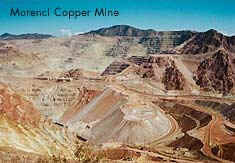
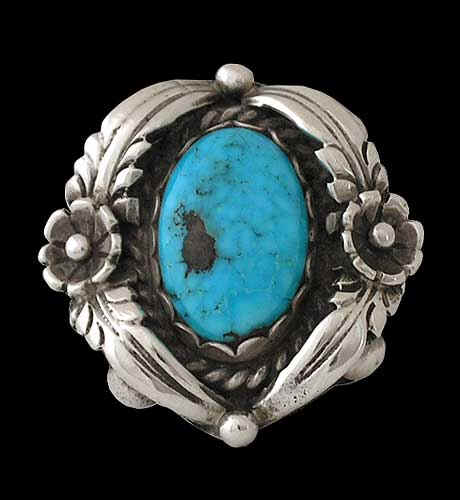
Morenci, Arizona -
on the New Mexico - Arizona border, the Morenci Mine is the largest copper mine in
the US. It stretches for miles and miles and the pits are thousands of feet fromt
hhe top of the mountain. The
modern use of crushing and acid washing has destroyed this source of deep blue, silver
matrixed turquoise.
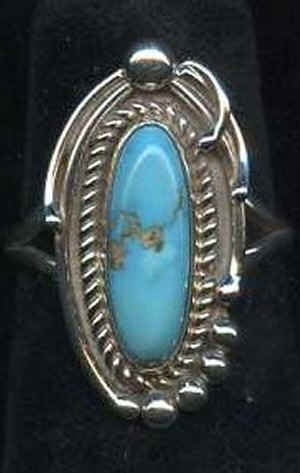
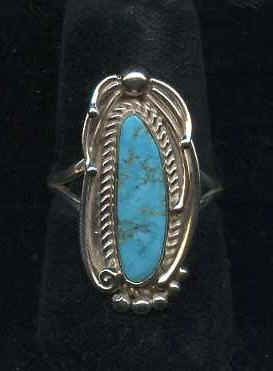
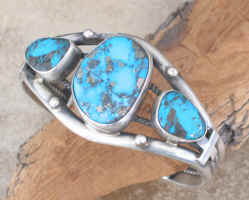
Quite common in the early 1970s when I made jewelry in Santa Fe. The stones are easily
matched for larger pieces.
Shadow boxing brought out the silver-like pyrite matrix. Copper miners who
"highgraded" or "lunch-boxed" the best
turqupose from the open pit mines were a primary source for many years,.
http://www.nevadagem.com/pages/mineinfo12.html
r
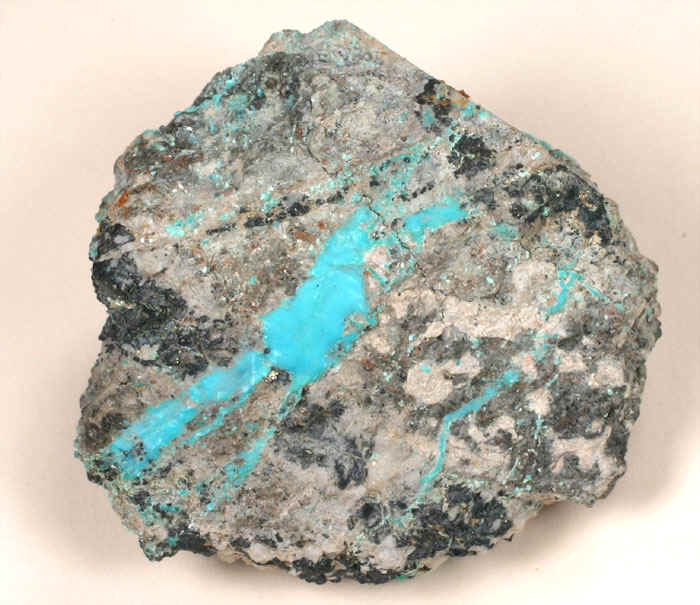
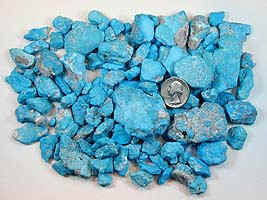
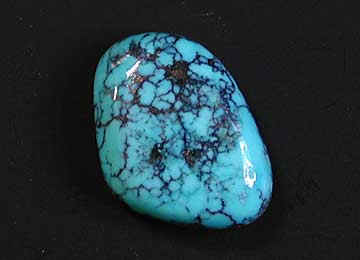
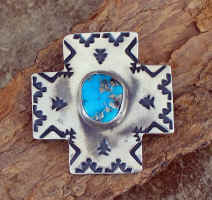
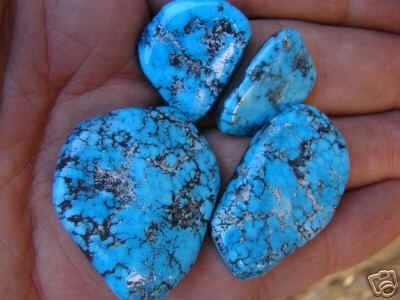
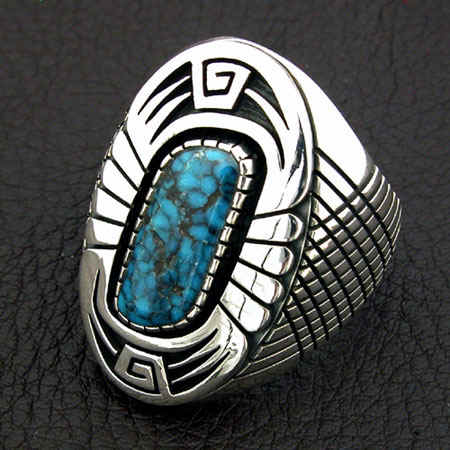
The best Morenci were distinctively deep blue and had a black iron-pyrite matrix that when
polished had a silver luster.
This made its appeal for settings in silver jewelry that much more fashionable. The
sample below is from the Metcalf Pit
in the Telegraph Hill area, 4500-4550 foot level and being hand dug. There is very
little being mined now. All in all,
it is very hard and offers the beholder a lovely natural blue.
For more information, see
http://www.twinrocks.com/products/3905-Navajo-Silver-Morenci-Turquoise-Ring-Leo-Francis.html
:"The March 1977 edition of the
“International Turquoise Annual” states, "Many years ago, while mining for
copper,
workers unearthed a large zone of turquoise-bearing rock and, realizing its value, began
working this zone,
neglecting the copper. In order to ensure copper production continuing, the copper company
that held the mine
at the time took the entire turquoise deposit, which was extensive, and buried it under
thousands of tons of
waste rock from the pit and it is still sitting there. Uncovering it would be too massive
and expensive a project."
(Source: http://www.nevadagem.com/pages/mineinfo12.html
)
http://www.cabbers.com/rough/turquiose/morenci_turquoise.shtml
http://www.nevadagem.com/pages/categorypages/morenci.html
http://www.silversun-sf.com/custom/p208.jpg
See also http://www.redstreakdesigns.com/turquoise%20files/turquoise/turquoise.html
 $90.00 $90.00 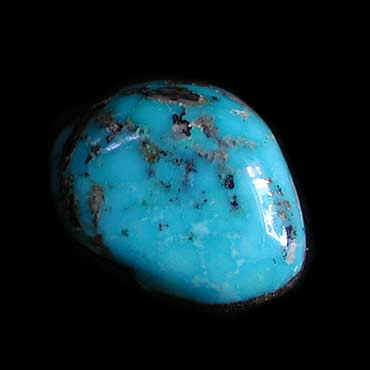
http://www.twinrocks.com/products/3905-Navajo-Silver-Morenci-Turquoise-Ring-Leo-Francis.html
http://www.nevadagem.com/pages/categorypages/morenci.html
$6.00/Ct. compared to $.35/Ct. in 1994.
EBAY
117Ct $80
http://www.e-pueblo.com/products/turquoise.shtml
http://turquoisebuffalo.com/page/TBG/PROD/2MT/SRA50
http://www.silversun-sf.com/custom/b161.jpg
See also http://www.theturquoisechick.com/specimens.htm
http://www.silversun-sf.com/custom/items/e147.htm
http://www.silversun-sf.com/custom/items/b161.htm
$226 http://www.silversun-sf.com/custom/items/p208.htm
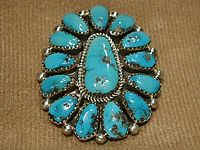
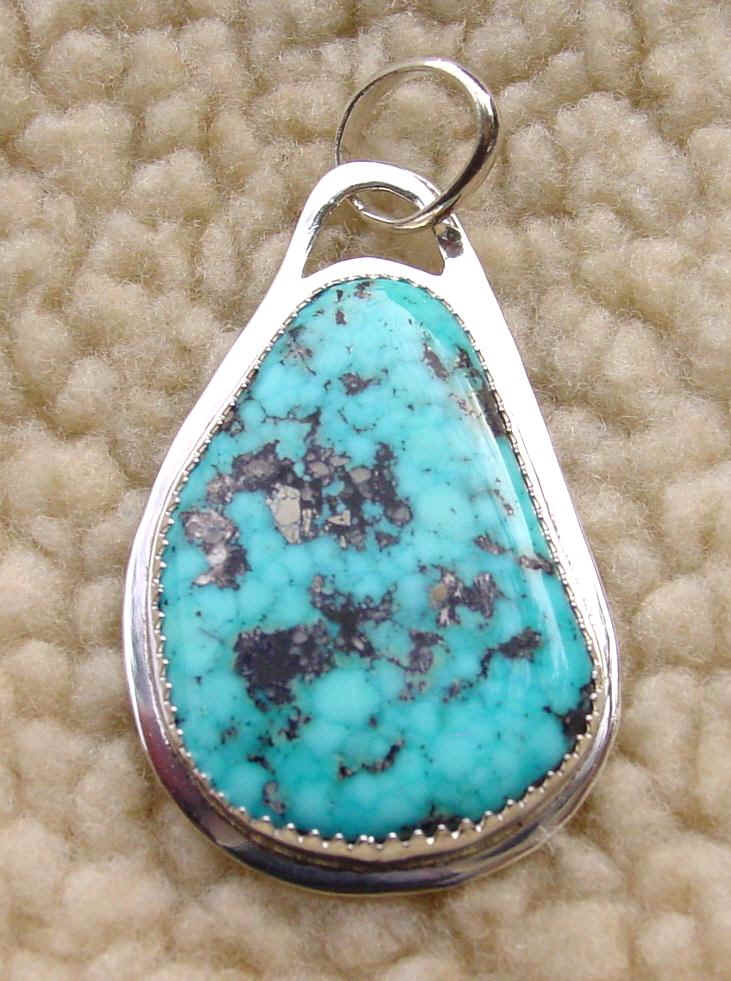
www.litasj.com/images/old_morenci_pendant.jpg
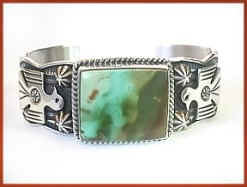
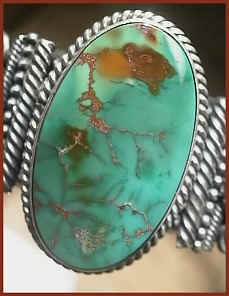
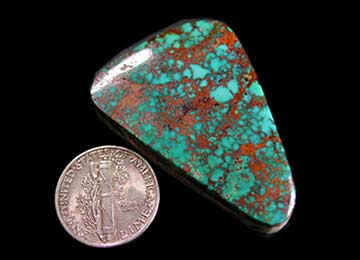
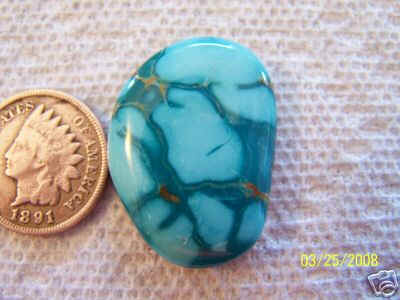
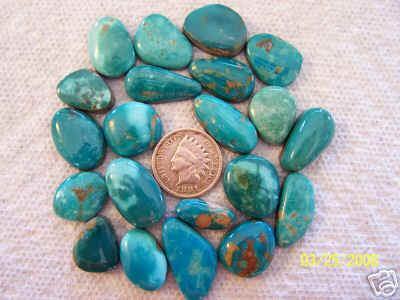
Pilot Mountain,
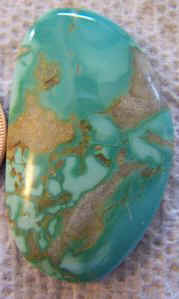 Western Nevada, near Mina. It
was opened as a copper claim in 1930. Then it Western Nevada, near Mina. It
was opened as a copper claim in 1930. Then it
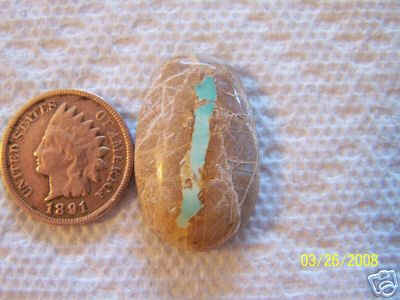
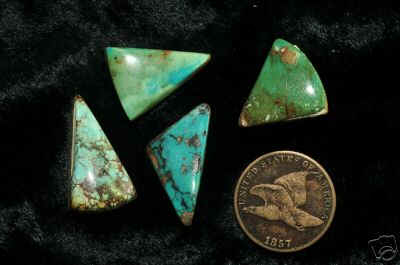
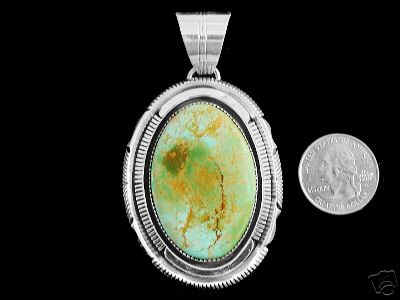
became an open it mine in 1970. This produces only about 150-200 lbs. per
year. Pilot Mountain
turquoise forms in thin
seams, with some nugget formations. According to the current owner, the turquoise that has
formed in thin seams is high
grade with better, deeper blue-green colors. Most Pilot Mountain turquoise is called
“grass roots,” meaning the best
deposits are found within ten feet of the surface.Pilot Mountain turquoise is highly
admired for its deep blue-green color
variations. This stone also has very interesting matrix patterns, which range
from red to brown to black, most notably a
rich tobacco brown. Some of the matrix in high grade Pilot
Mountain is beautiful spider web. Pilot Mountain turquoise is
a hard stone that takes a good polish. Because of this hardness, this stone does not
change colors with prolonged exposure
to skin oils, etc. Pilot Mountain
has nine federal mining claims operating where small miners conduct their mining two to
three times a year with very minimal tools - a back hoe and pick. This beautiful,
high-grade stone looks like Royston, but
is priced at half the cost. (See
http://www.e-pueblo.com/products/turquoise.shtml
http://www.silversun-sf.com/turquoise_info/ajax.htm
) Lots of color variations from Pilot Mountain:
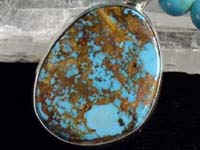  $278 $278
http://www.skystonetrading.com/items.asp?type=TradJewelry&orderby=New
  $1.60/Ct.
http://www.skystonetrading.com/item.asp?ItemID=31527
http://www.nevadagem.com/pages/categorypages/pilotmnt.html
 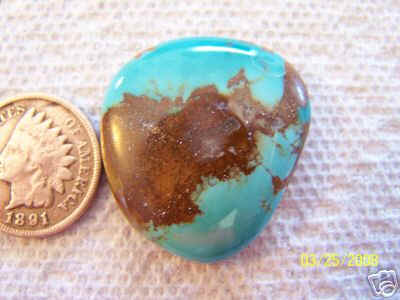
 Offered on EBAY for $100.00
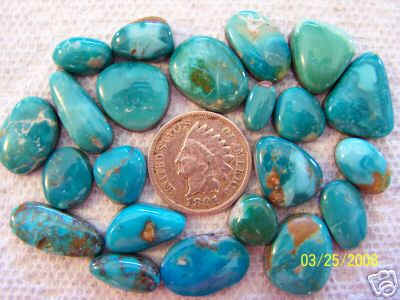
 Ebay 140 Ct.$70 Ebay 140 Ct.$70
 EBAY
$238.95 EBAY
$238.95 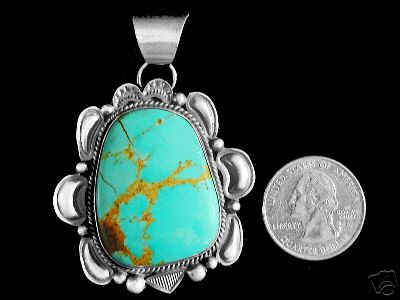 EBAY
$185 EBAY
$185 |
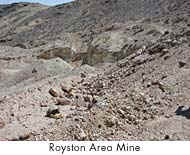
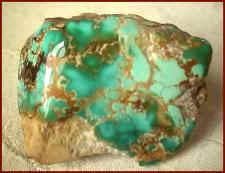
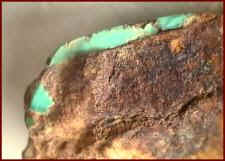
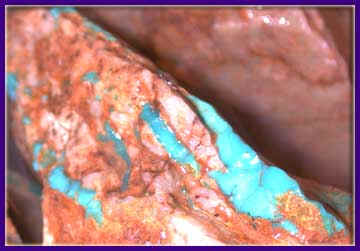
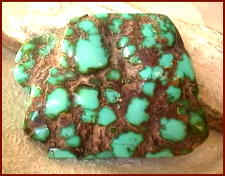
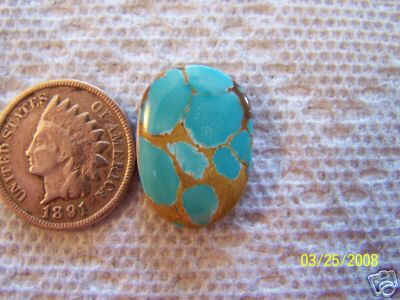
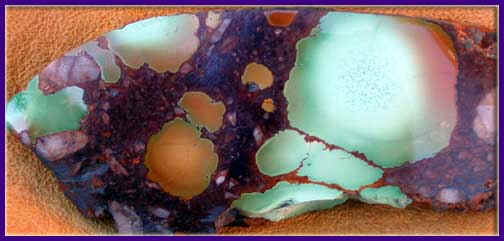
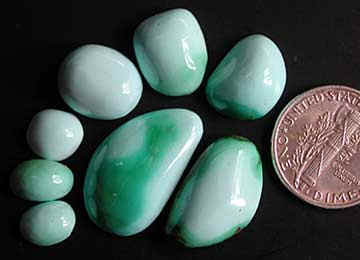
Royston, Nevada Royston Mine. 24 miles
north of Tonapah. Also known as Royal Blue.
There were four turquoise claims: Bunker Hill, Easter Blue (see above), Oscar
Wehrend and Royal Blue.
These tunnel mines were first discovered in 1902. They were one of the most
productive turquoise mines.
The host rock, rhyolite, gives Royston its often gold-colored matrix. Some
reports say these mines are
lardely exhausted. ( http://www.e-pueblo.com/products/turquoise.shtml
) The colors vary from emerald green
to blue in the same rock From a silver mine. (See http://www.roystonturquoise.com/ )
See also http://www.nevadagem.com/pages/mineinfo14.html
http://www.skystonetrading.com/turquoise.asp
Npte vein.
 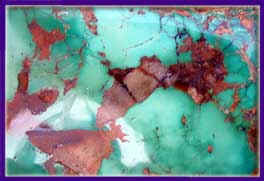
http://www.roystonturquoise.com/Roughturquoisepics/roughroyston007f.jpg
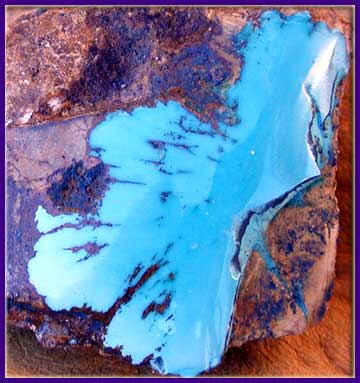 
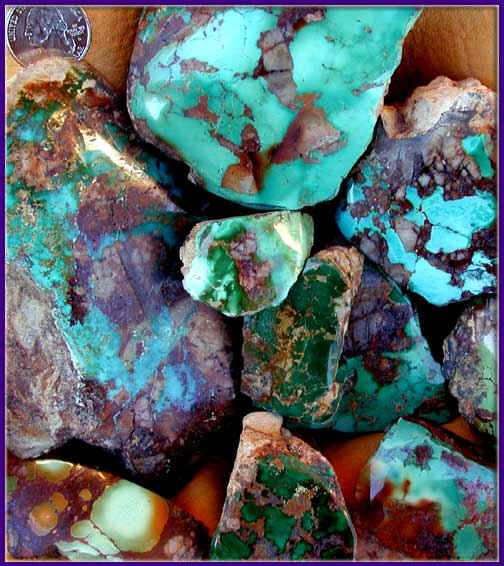 
http://www.skystonetrading.com/turquoise.asp
http://www.roystonturquoise.com/Roughturquoisepics/roughroyston015f.jpg
$200 to $400/Pound
http://www.nevadagem.com/pages/categorypages/royston.html
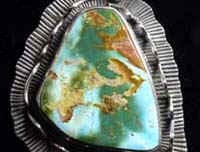
$699 - http://www.silversun-sf.com/custom/items/b122.htm
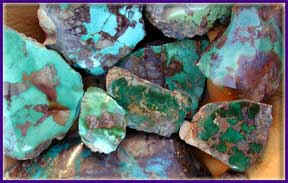 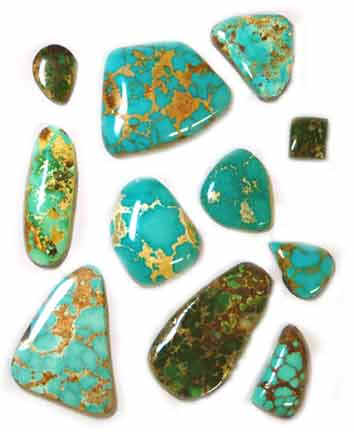
http://www.roystonturquoise.com/cabochons.htm
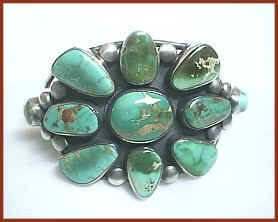
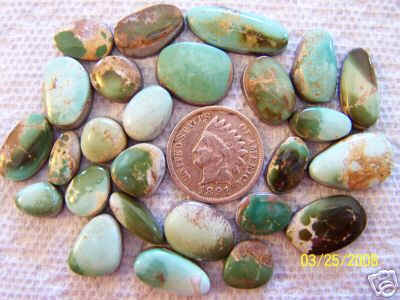
http://www.skystonetrading.com/item.asp?ItemID=31486
Offered
on EBAY.
|
|
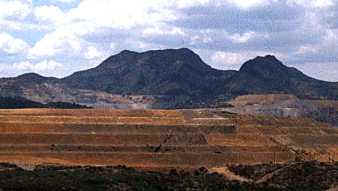
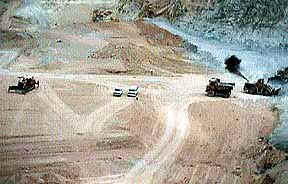
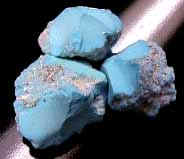
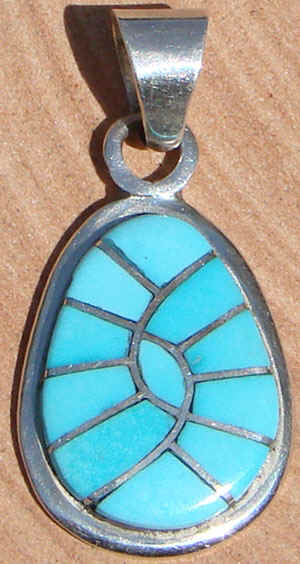
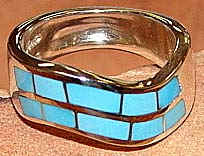
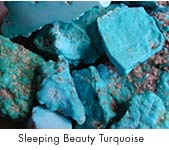
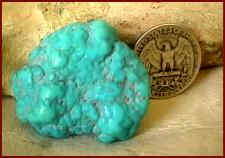
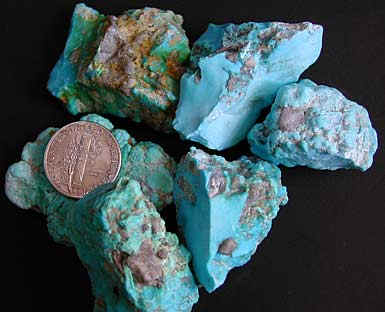
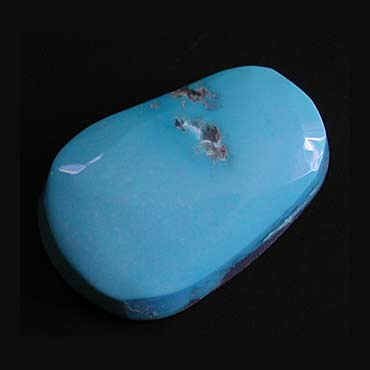
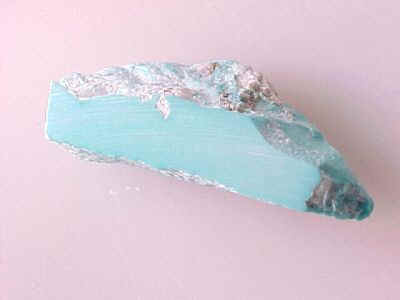
Sleeping Beauty -
Seven miles from Globe, Arizona A distinctive sky blue. A solid blue
without matrix. Zuni Pueblo silversmiths especially use this for inlay jewelry.
"This mine is one of the
largest in North America. Monty Nichols, owner and miner of the Sleeping Beauty mine, says
that the mine is
producing well, about 1600 pounds a month. Of that, only 4% is natural. Most of the
turquoise from the mine,
80-90%, is altered in some way. Most of that percentage is enhanced, which is more
expensive than stabilization,
and sold to large distributors in this country and Europe. Now, most of the turquoise that
comes out of that mine
comes form the tons of tailings piles that have been accumulating all these years."
( http://www.e-pueblo.com/products/turquoise.shtml
)
See - http://www.sbturquoise.com/
http://www.nevadagem.com/pages/mineinfo15.html
http://www.skystonetrading.com/turquoise.asp
http://www.nevadagem.com/pages/categorypages/turqroughmix3.html
See - http://www.theturquoisechick.com/specimens.htm
 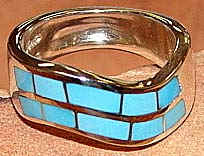 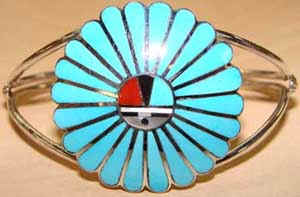
Commonly used in classic jewelry, where roundness and absence of matrixes are
valued.
See - http://turquoise.facetroughgemstones.com/
|
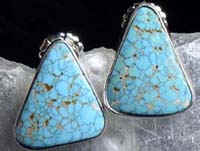
Shoshone Indan Mountain -
See Indian Mountain.
The lode was discovered in 1970 by a Shoshone sheepherder
who stumbled upon a vein of turquoise on a hillside
while tending his sheep. Eddy Mauzy and his family subsequently mined and marketed
turquoise from this site to top
Southwest Indian artisans, and jewelry featuring unique turquoise Mountain was first
featured prominently in Arizona
Highways magazine in the late 1970's.
http://www.e-pueblo.com/products/turquoise.shtml
|
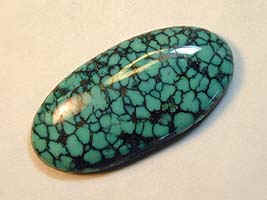
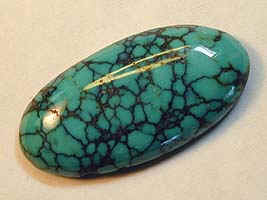
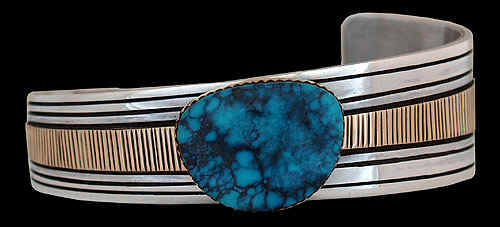
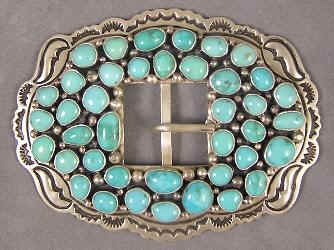
Stormy Mountain Mined in 70s after turquoise
was discovered when a new road to an old copper mine
was being bull-dozed. It produced veins that were as thick as an inch. Not
much from this mine is seen today.
http://www.nevadagem.com/pages/mineinfo15.html
Some have noted that the backing for these stones was often a ground-up
pyrite. This was used to increase the
weight of each stone before it was sold. Source:
http://www.cabbers.com/cabs/turquoise/stormy_mountain_turquoise.shtml
Dark green to dark blue. Hard. Often these stones have a black blotchy
chert that some say resembles
a storm, hence the name of the mine. .
http://www.silversun-sf.com/turquoise_info/ajax.htm
See http://www.cabbers.com/cabs/turquoise/stormy_mountain_turquoise.shtml
 $815. $815.
http://southwestsilvergallery.com/asccustompages/products.asp?productid=3927&categoryid=74
http://www.e-pueblo.com/products/turquoise.shtml
http://www.twinrocks.com/products/5909-Navajo-Silver-14KGold-Stormy-Mountain-Turquoise-Bracelet-Toby-Henderson.html
|
Tonopah
See http://www.stonesnsilver.com/product/BST423/TonopahTurquoiseNVGraduatingPotatoNuggets16inStr.aspx
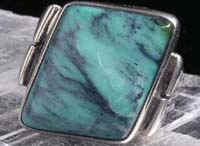
|
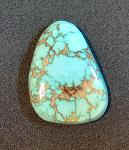
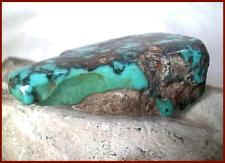
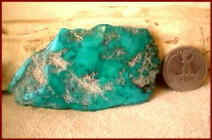
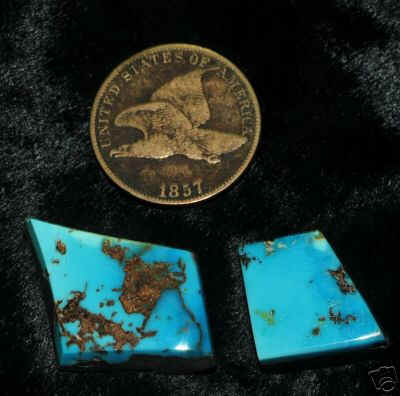
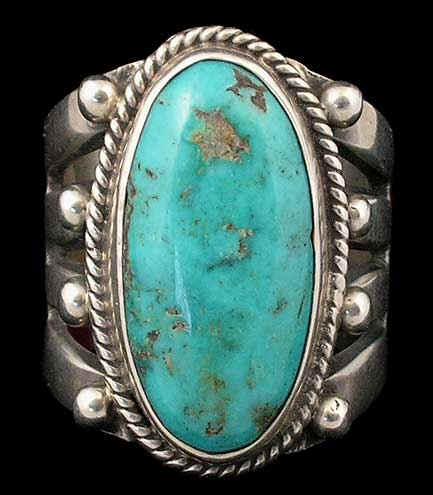
Tyrone, New Mexico - rare Intense blue.
Rusty brown matrix. Phelps Dodge near Silver City, NM
controlled this area. "A discovery in
1893, the 'Elizabeth Pocket', proved to be the richest pocket ever in New Mexico.
All rock from this area north of Tyrone was shipped to Europe for $100 to $150 a carat
weight at retail. It was a very
pure blue with small quartz crystals. However, turquoise has not been retrieved from that
mining operation since the
early 1980's when Phelps Dodge changed its method of copper ore processing to crushing and
acid wash. That method
destroys any turquoise in the copper ore.The Tyrone turquoise in new jewelry is from
private stashes. It is medium brilliant
blue in its high grade form. Tyrone turquoise is part of the mineral band that starts east
of Silver City and curves around
through Arizona and the Morenci turquoise mine area into Mexico. Today it is valued for
both its beauty and rarity."
(Source: http://www.e-pueblo.com/products/turquoise.shtml
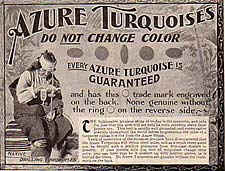
"The largest mine in the area was the Azure
mine. It was located 10 miles southwest of Silver City and was opened
in 1891. It became not only the most famous turquoise mine in the area but the country.
Pogue states in his 1915 classic
work on turquoise that "It has been operated in modern times more extensively than
any other turquois mine in this country,
and its stones are the equal of the Persian gems.” In 1893 the famous “Elizabeth
Pocket” was entered, which produced
more high-grade turquoise than any single deposit on record.” The Elizabeth Pocket
was 100 feet long, 40 feet wide,
and 40 to 50 feet high. It was thought to be the riches vein of turquoise ever discovered.
The cut cabochons were
marketed throughout the country with ads appearing in Harper’s and McClure’s
magazines. Each gem was engraved
with a circle on the back with the ad stating, "None genuine without the ring O on
the reverse side.” Azure turquoise,
because of its hardness, was guaranteed not to change color.
( http://www.nevadagem.com/pages/mineinfo16.html
 http://www.usturquoise.com/
http://www.skystonetrading.com/turquoise.asp
See images at http://www.redstreakdesigns.com/turquoise%20files/turquoise/turquoise.html
.
http://www.twinrocks.com/products/489-Navajo-Tyrone-Turquoise-Ring-Derrick-Gordon.html
|
|
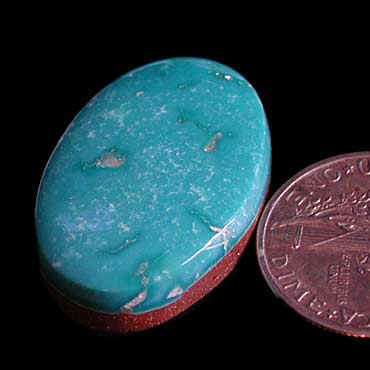
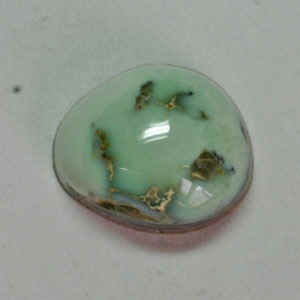
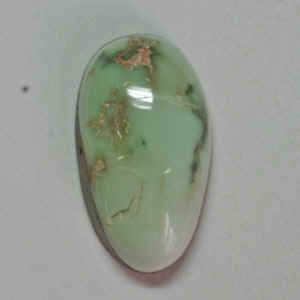
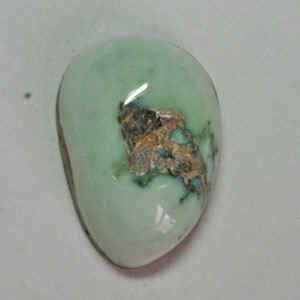
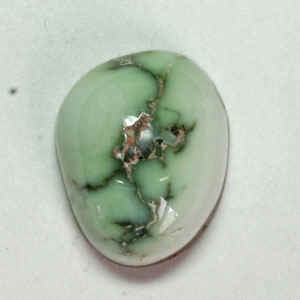
White Horse
http://www.nevadagem.com/pages/categorypages/nevadamines3.html
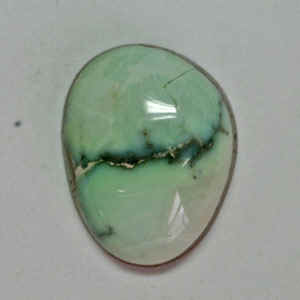
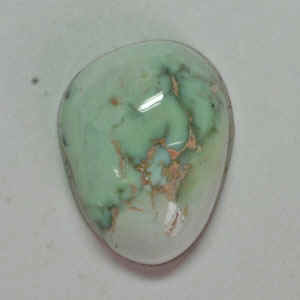
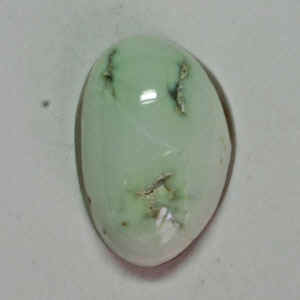
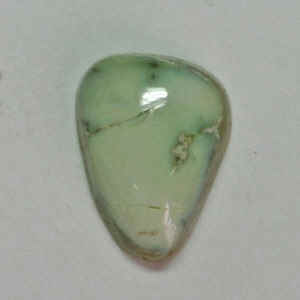
White Stallion - Navada.
White and Light Green.
Images of these stones and mor
elike them appear at http://www.turquoiseamerica.com/jim2.htm
They are for sale there.
|
| |
| |
Unknown Mines
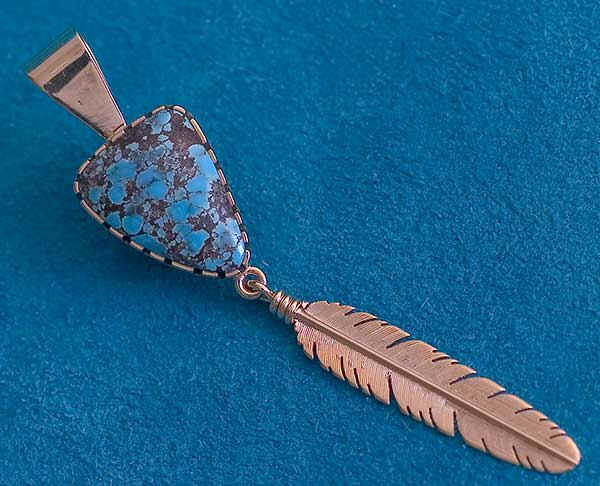 $723. $723.
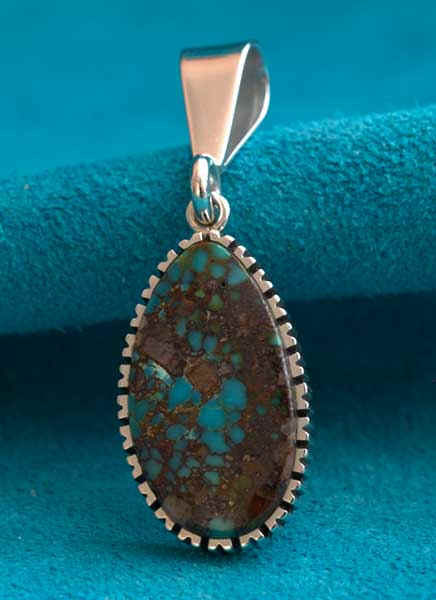 $625. $625.
http://www.sedonaindianjewelry.com/Jewelry/BTsosie3.htm
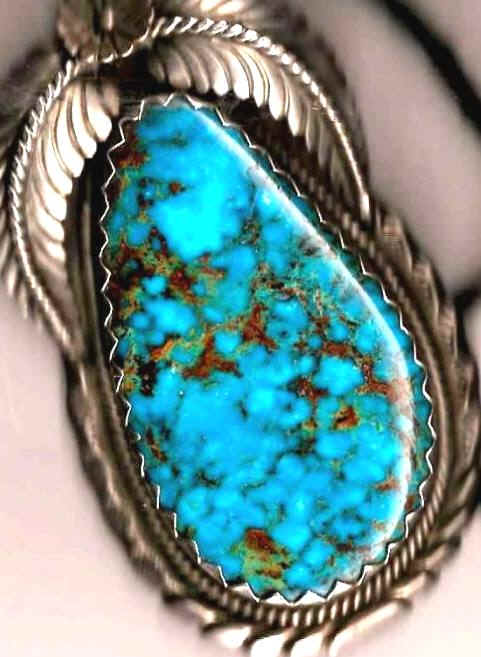
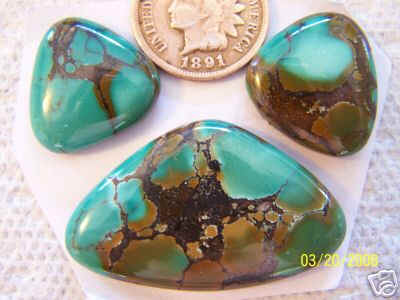
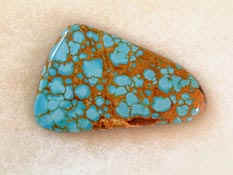
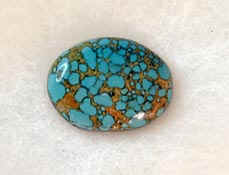
Bought in Tonopah pawn shop. Offered on EBAY, Starting bid $175,
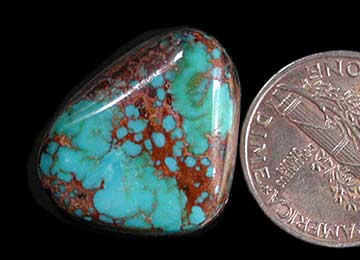
http://www.omegagrafix.com/turq.htm |
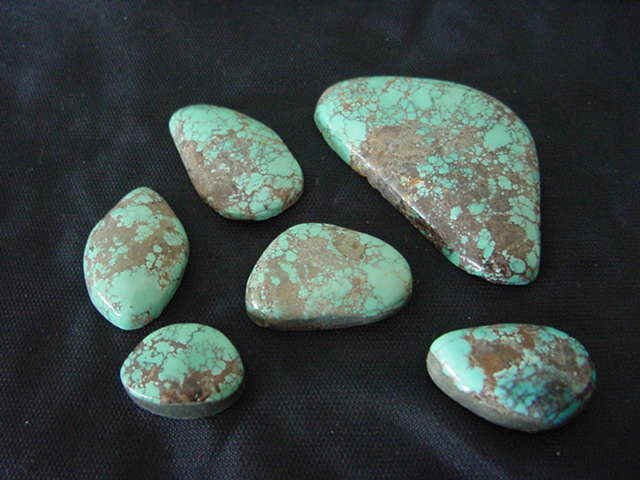
http://stephan.net/dds/product/15321.html
$105.00 |
| |
| |
| |
| |
|
| |
|
 TigerSoft
News Service 4/1/2008 www.tigersoft.com
TigerSoft
News Service 4/1/2008 www.tigersoft.com 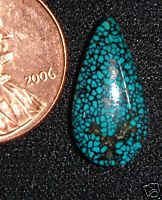 See
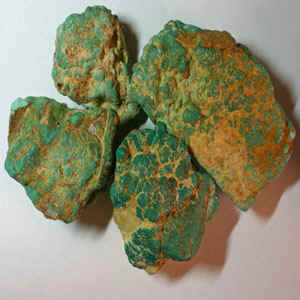
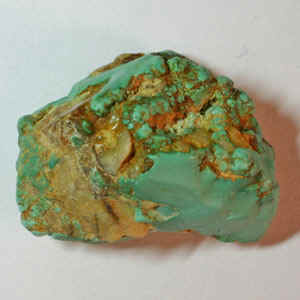
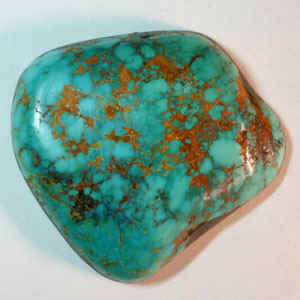
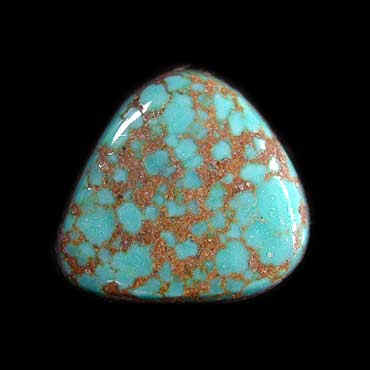
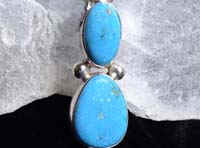
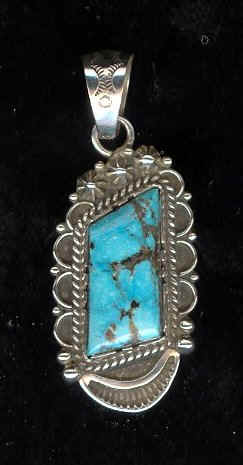
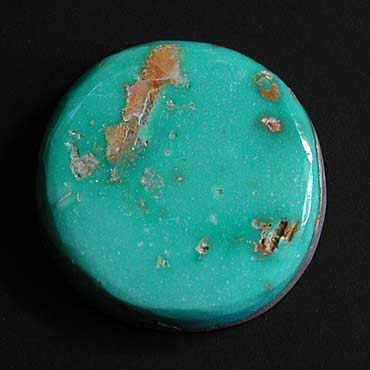
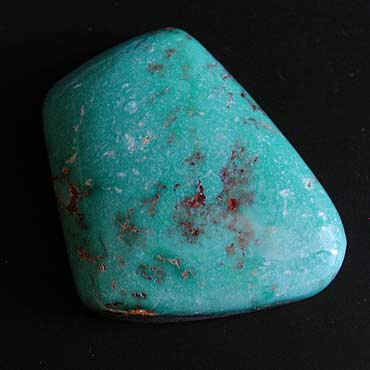
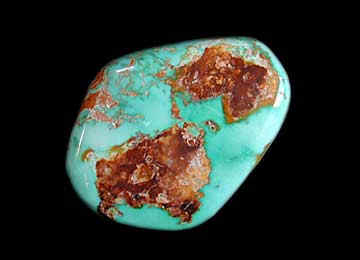
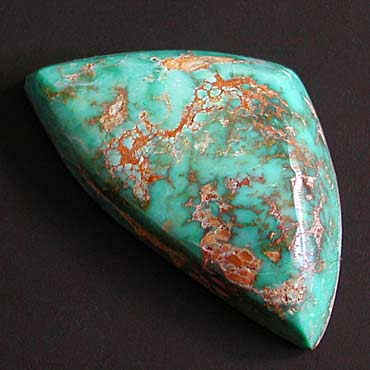
if you can identify where this is from the samples below.
See
if you can identify where this is from the samples below.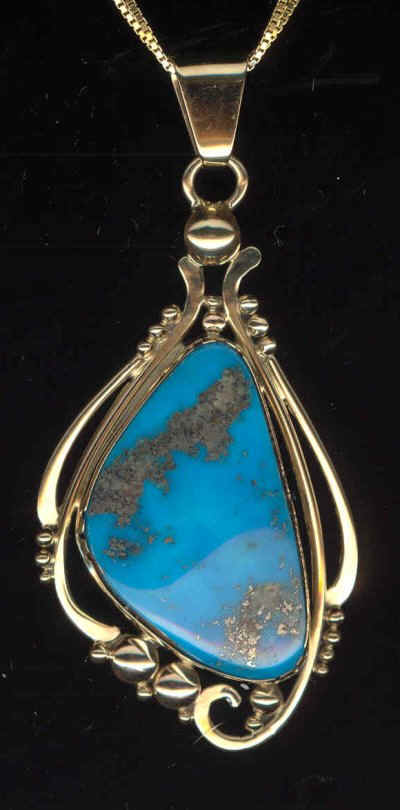
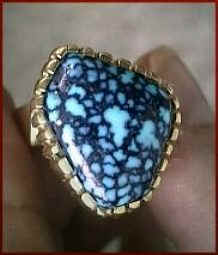
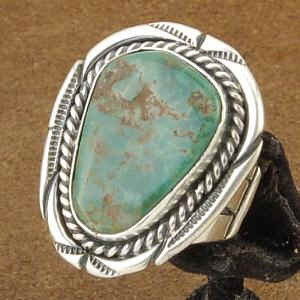 $88.
$88.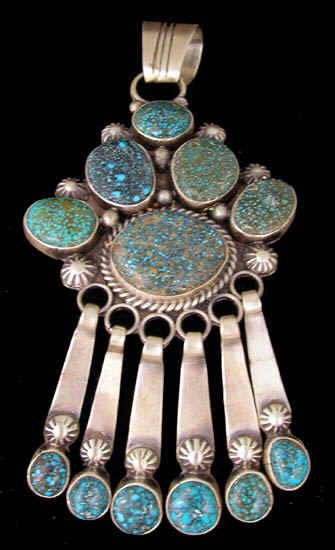 $600.
$600.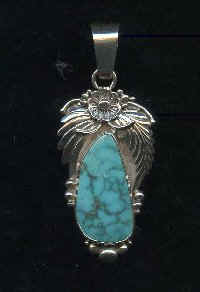 $190
$190 $198
$198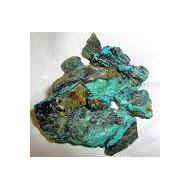
 $250
$250 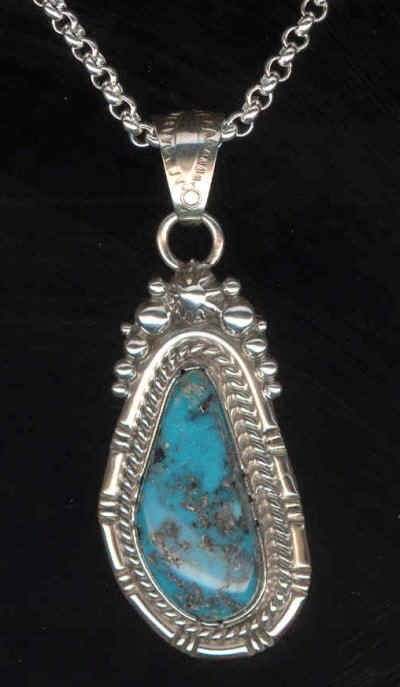 $226
$226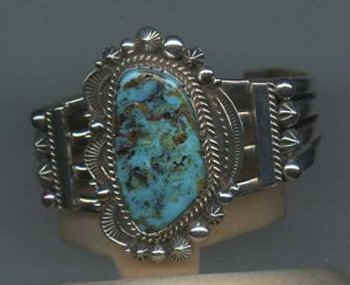 $667
$667
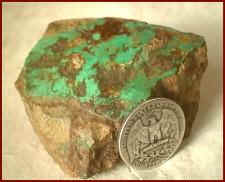
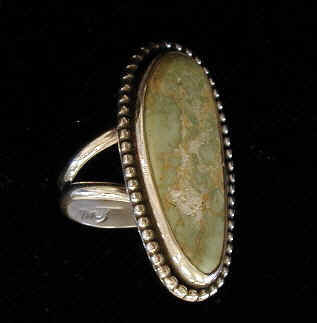
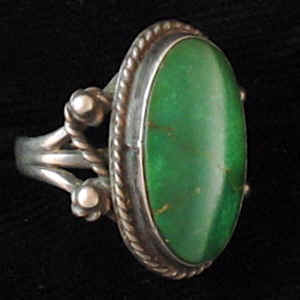 Ring from 1930s. $165
.
Ring from 1930s. $165
.  $97 -
$97 - 
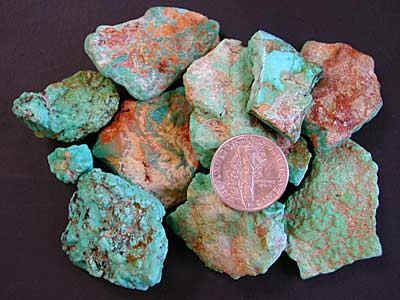
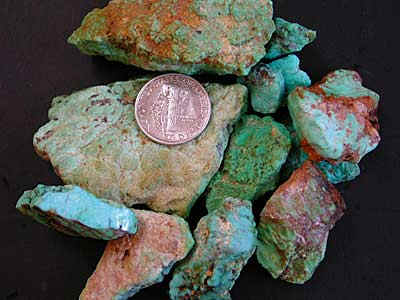
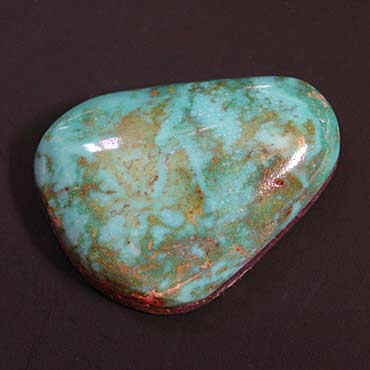
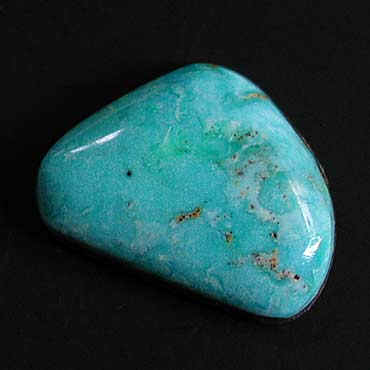
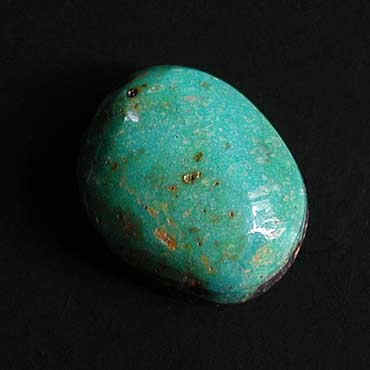
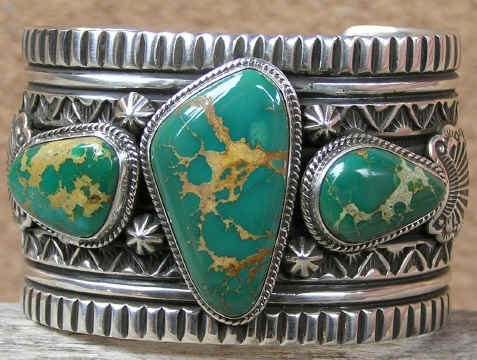
 Turquoise here comes as a by-product of local gold mining. The
turquoise
Turquoise here comes as a by-product of local gold mining. The
turquoise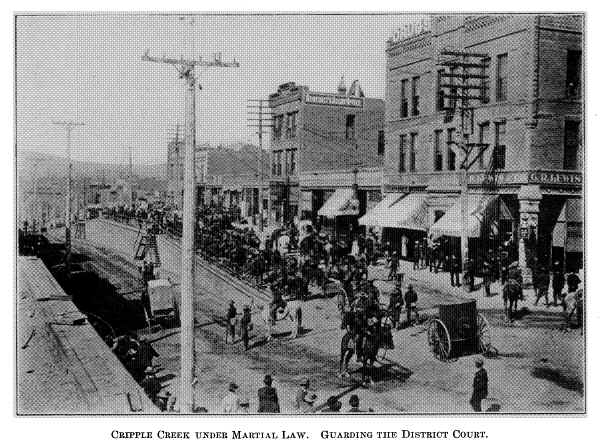
 $798
$798
 $425.
$425. $405.
$405.  $220
$220  From 1970s.
  EBAY $115.
 EBAY $65
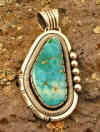 This is quite nice. Click on link to see it
better.
This is quite nice. Click on link to see it
better.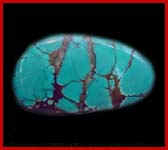
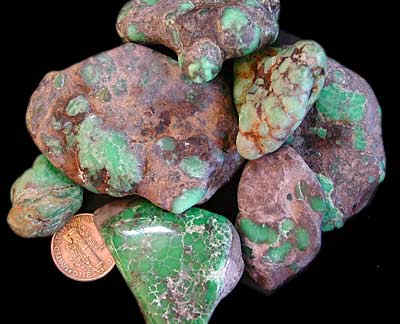
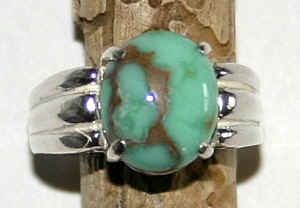
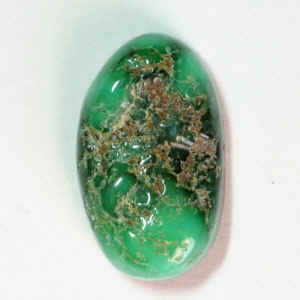
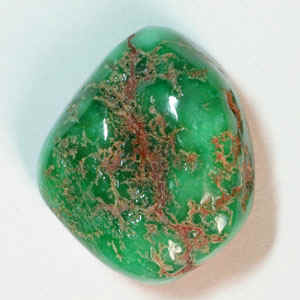
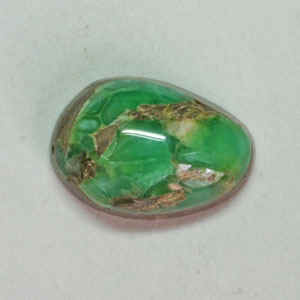
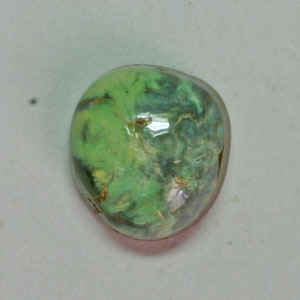
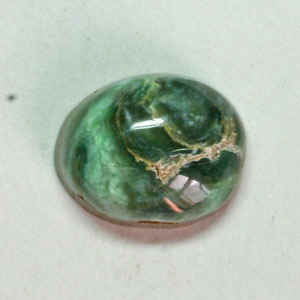
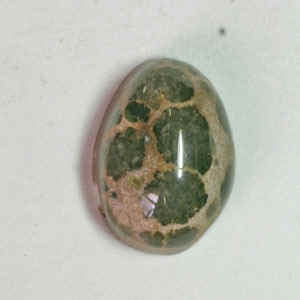
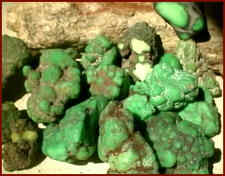 Variscite.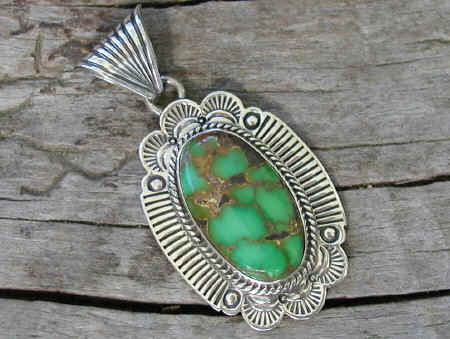
 $175
$175 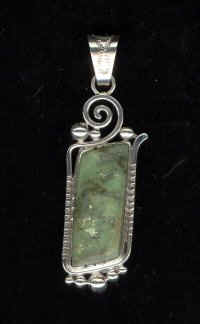 $523 -
very old.
$523 -
very old.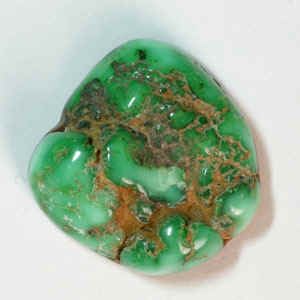
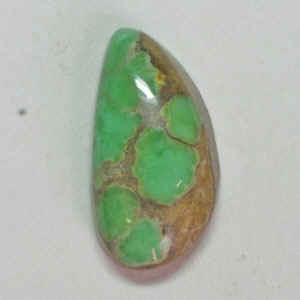
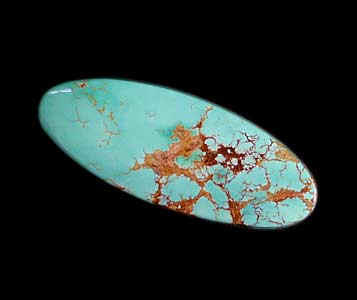 $4.00/Ct.
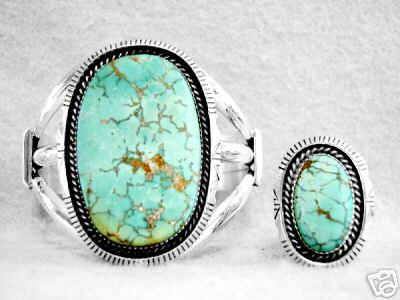 EBAY $435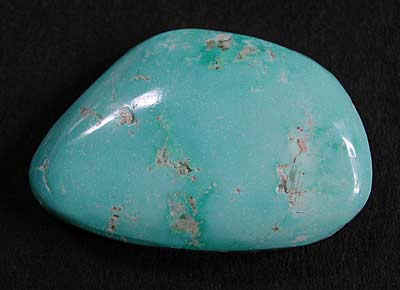
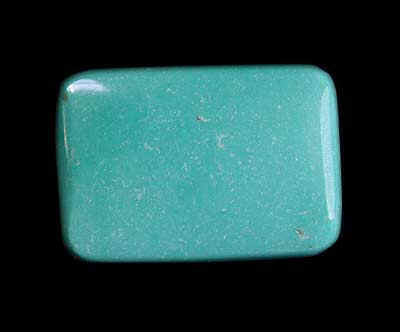
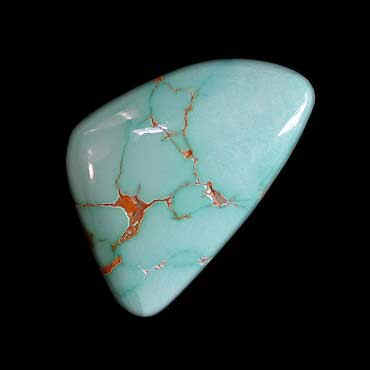
 $1,350 - sold
 $385
$385
 I doubt if
the stone's matrix naturally contains gold.
I doubt if
the stone's matrix naturally contains gold.  EBAY $125.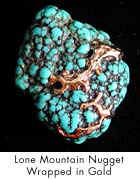
 $133.
$133.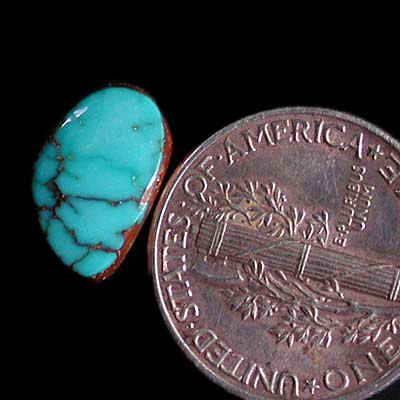

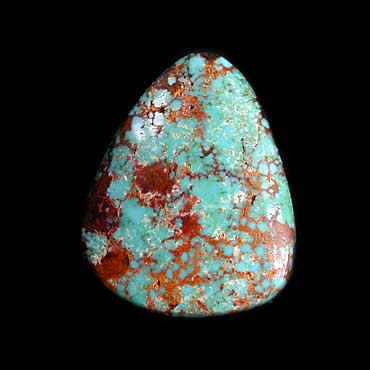 $4.00/Ct/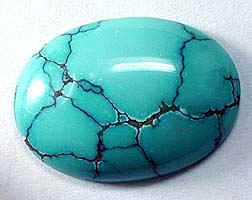
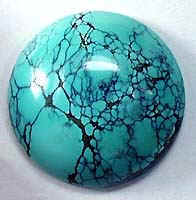
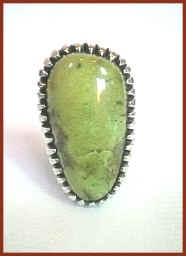
 $3.00/Ct'
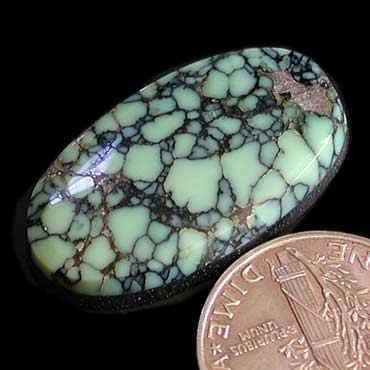 $4.00/Ct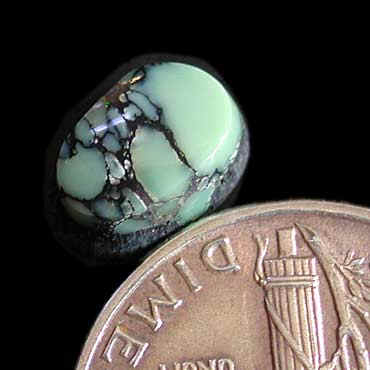
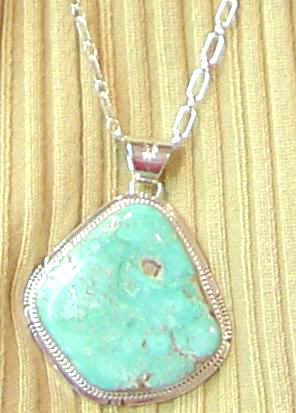
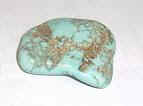
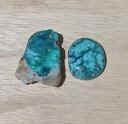
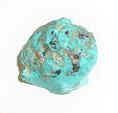
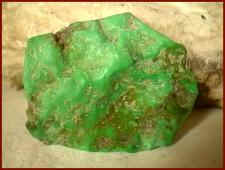
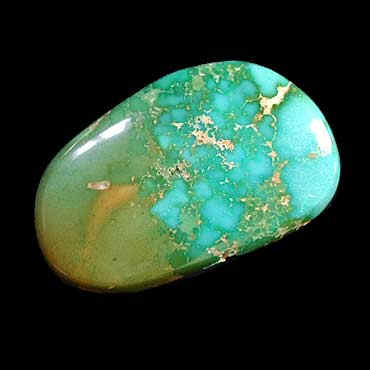
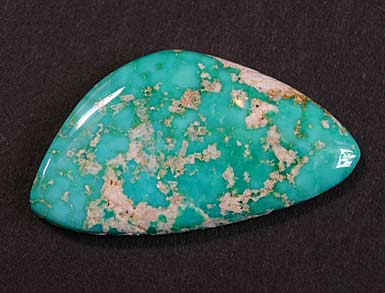
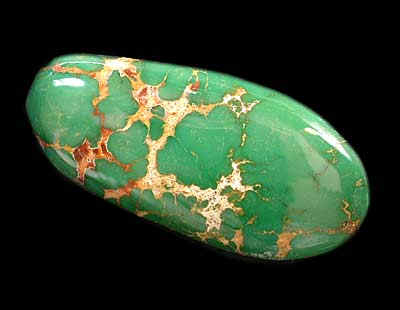
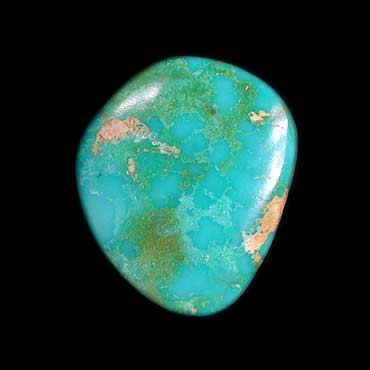
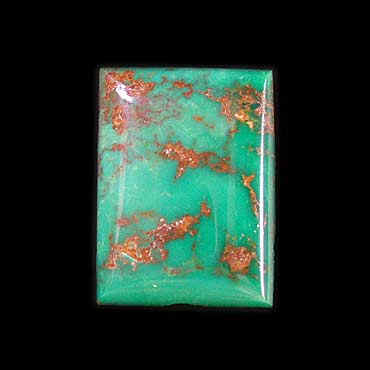
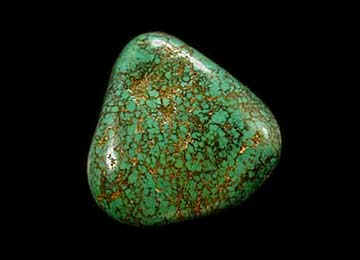
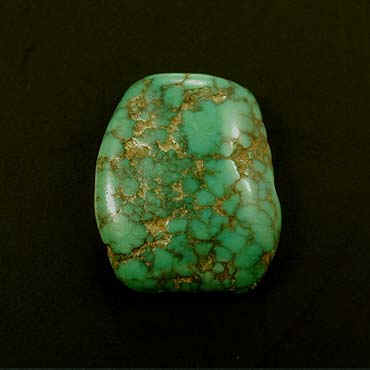
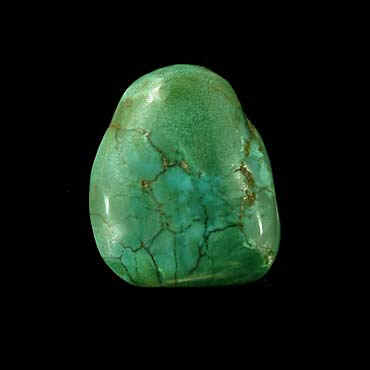
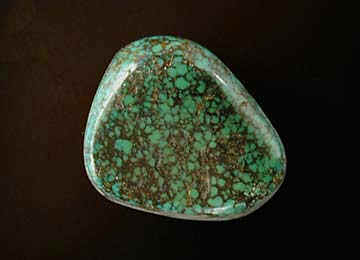
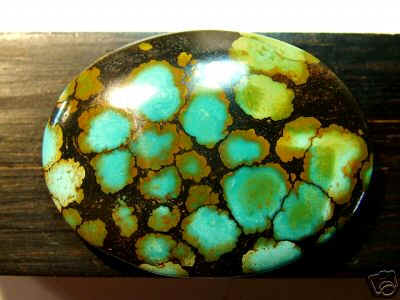 Nepalese turquoise on EBAY.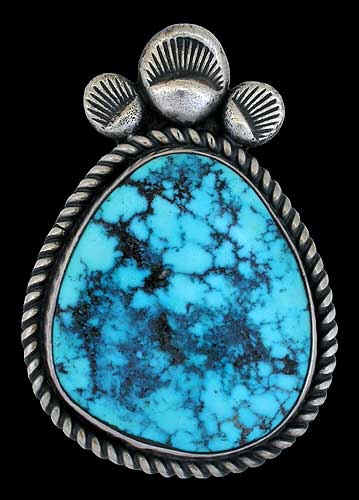
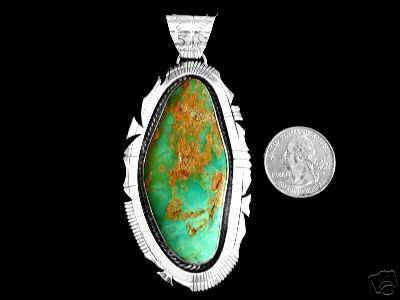
 $417
$417