We technicians understandably grow to believe that our world of charts and
technical indicators, supplemented with an understanding of Seasonality and the FED,
is sufficient to predict the stock market. Most of the time it is. But outside forces do
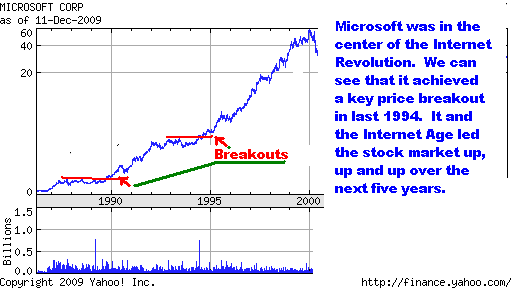
intrude from time to time. In 1995, the world entered the "Age of The Internet". This
was a technological revolutiuon bigger than the Automobile in the 1920s or even
Computers in the 1960s or 1980s. The Internet affected everyone. Via the personal
computer, it was avaialble to everyone. It was an equalizing force, a cost-lowering
force and a force that quickly seized the imaginations of millions as they considered
its potential in so many new arenas. In retrospect, how could the market not go up.
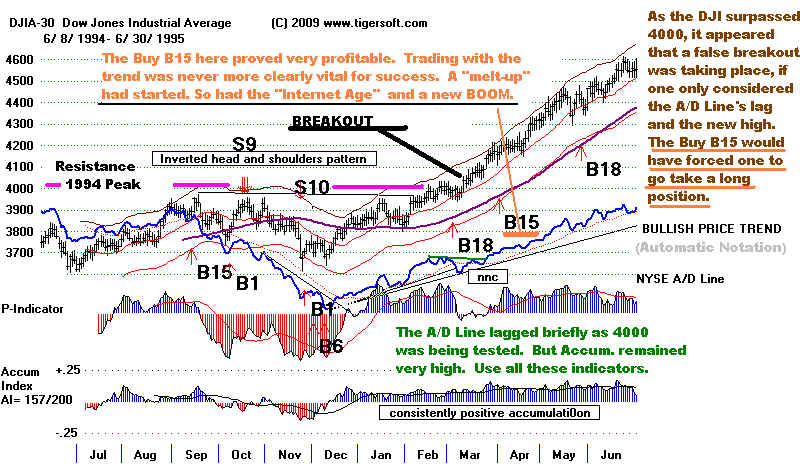
The rally that started off 1995 seemed very suspect. The A/D Line was lagging and
the P-Indicator went negative in February. But looking at the whole picture, we see
that the Accumulation Index was steadily positive. All dips were being bought by
institutions. That the DJI was going into all-time high territory made the path of least
resistance be UP. As the internals improved, traders had to switch to the long side
to survive. But, as often happens, what began, at first, as a painful switch of positions,
soon became extraordinarily profitable. Then the challenge was to just let profits run. a